
Honest Chimney Repair West Hempstead NY: 2026 Guide for Rockville Centre Residents
Most chimney problems on Long Island don’t start with a dramatic crack or a fire. They start with a homeowner doing a little research, deciding the issue looks manageable, and then making it worse. We’ve seen this play out dozens of times across Rockville Centre, West Hempstead, and neighboring communities and we’re not saying that to be harsh. We’re saying it because the line between what you can safely handle yourself and what genuinely requires a licensed professional is not where most people think it is.
If you’ve been searching for chimney repair West Hempstead NY, there’s a good chance you’re trying to figure out exactly that: can I patch this myself, or do I need to call someone? The honest answer is more nuanced than most online guides let on, and a few widely repeated misconceptions are costing local homeowners real money and, in some cases, real safety.
A Rockville Centre Job That Started as a “Quick Fix”
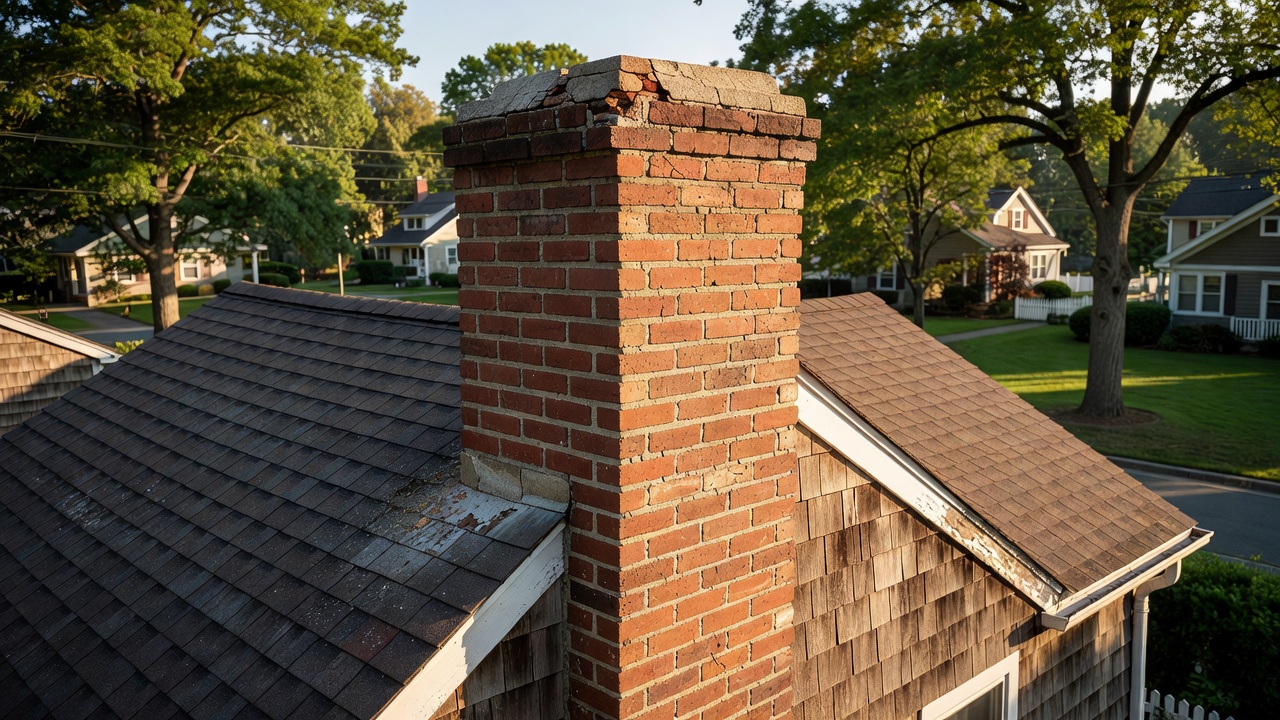
Last spring, a homeowner on Sunrise Highway near the Rockville Centre border called us after spending two weekends on a DIY chimney repair. She’d noticed mortar crumbling between the bricks near the crown and bought a tube of fireplace mortar from a hardware store in Valley Stream. The repair looked clean from the ground. By December, water had gotten behind her liner and ruined a section of the interior flue tile. What would have been a $400 repointing job turned into a $1,800 repair once the liner damage was factored in.
That’s not an unusual story for us. It’s the kind of call we get every fall from homeowners in Rockville Centre, Baldwin, and Merrick who tried to stay ahead of a problem and inadvertently accelerated it.
The Caulk and Hardware Store Mortar Problem
One of the most persistent misconceptions we encounter is that chimney mortar is chimney mortar that the gray tube at the home improvement store is equivalent to what a mason uses. It isn’t, and the difference matters. Chimney joints are exposed to temperature swings that can exceed 1,000 degrees Fahrenheit at the firebox level, plus freeze-thaw cycles every Long Island winter. Standard pre-mixed mortar from a big-box store is rated for neither. It shrinks, it cracks, and it lets moisture in faster than the original failing joint would have.
Proper chimney repointing requires a mortar mix matched to the existing brick lime content, aggregate size, and compressive strength all factor in. Getting that wrong on a 1940s home in West Hempstead, where soft historic brick is common, can actually pull the face off original bricks when the joint fails and expands. A good mason assesses the existing masonry before mixing anything.
Thinking a Crown Coat Solves a Structural Crown Problem
Crown seal products the elastomeric coatings sold for DIY chimney waterproofing are legitimate maintenance tools when the crown itself is structurally sound. What they don’t fix is a crown that has cracked through to the flue, shifted on an angle, or lost significant mass. We see a lot of painted-over crowns on houses in Oceanside and Rockville Centre that look fine from the roof edge but have active water infiltration running straight into the liner.
The CSIA recommends that chimneys be inspected at least once per year and cleaned whenever deposits exceed 1/8 inch of creosote buildup. That inspection standard exists precisely because surface-level repairs can mask deeper damage. A coating applied over a failing crown delays the diagnosis, sometimes by years, while water quietly degrades flue tiles and interior masonry.
Assuming a Working Fireplace Means a Safe Chimney
This one is genuinely dangerous. A fireplace that drafts properly and produces a good fire is not evidence that the chimney is structurally sound or free of hazards. Cracked flue tiles, deteriorated mortar joints inside the flue, and compromised liners can all exist without any visible symptoms from inside the house. The NFPA reports that 27% of all home heating fires between 2016 and 2020 were caused by chimneys that had not been cleaned and the majority of those homeowners had no idea there was a problem before the fire.
We inspected a home in Garden City last fall where a family had used their fireplace every weekend for three winters. The flue had two sections of cracked clay tile and a gap in the liner at the smoke chamber. No draft issues, no smell, no visible sign from the firebox. That chimney was one heavy fire away from a serious event. A Level 2 camera inspection which no DIYer can perform on their own found it.
Underestimating What “Minor Flashing Repair” Actually Involves
Flashing leaks are the number-one source of water damage at chimneys, and a surprising number of homeowners believe they can reseal flashing themselves with roofing tar or silicone. Sometimes that works temporarily. More often, it traps moisture between the flashing and the masonry, which accelerates rust and mortar deterioration in exactly the spot you were trying to protect.
Proper flashing repair means removing the counter flashing from the mortar joints, cleaning the reglet, and re-embedding new metal correctly. On older homes in Hempstead and Lynbrook where lead flashing is still common this also involves handling a material that requires care and proper disposal. That is not a weekend project for someone with a caulk gun.
The Liner Replacement Misconception
We occasionally hear from homeowners who assume that if their fireplace still draws well, the liner must be fine. Clay tile liners crack from thermal shock, settle as a house shifts, and degrade from acidic condensation none of which affects draft until the damage is severe. Beyond that, chimney liner installation in New York is regulated. The New York State Department of State requires chimney sweeps performing certain types of chimney liner installations to hold a home improvement contractor license. Homeowners should verify licensing before hiring anyone, and they should certainly not attempt a stainless-steel liner installation themselves the consequences of an improperly installed liner are a fire or carbon monoxide risk, not just a failed repair.
HomeAdvisor and Angi data from 2024 and 2025 puts the national average for a chimney liner replacement at $2,500 to $5,000, with costs in the NY metro area running at the higher end of that range or beyond for complex jobs. That price reflects real expertise, real materials, and real liability. It’s not a markup. It’s the cost of doing the job correctly in a code-compliant way.
What You Actually Can Do Yourself
We’re not here to tell you to call a professional for everything. Cleaning the firebox, removing ash, replacing a damaged fireplace grate, or installing a basic damper cap cover are reasonable DIY tasks. Keeping the area around the hearth clear and making sure your smoke detector and carbon monoxide detector work — those are yours to own. But once you’re on the roof, mixing mortar, touching flashing, or evaluating anything inside the flue, you are in territory where a mistake costs more than the repair would have.
Our crew works regularly throughout Rockville Centre, West Hempstead, Uniondale, and across Nassau County, and we can usually tell within the first five minutes of a visit whether a previous DIY attempt made things simpler or more complicated. More often than not, it’s the latter not because homeowners aren’t capable, but because chimney systems are more interconnected than they appear from the ground.
If you’re a Rockville Centre or West Hempstead homeowner with a chimney that needs attention this year, don’t guess at it. Contact our team at Roosevelt Chimney LLC for a straightforward inspection and free estimate. We’ll tell you exactly what’s wrong, what can wait, and what can’t no pressure, no upselling, just honest answers from people who work on Long Island chimneys every day.
Frequently Asked Questions
How much does chimney repair typically cost in West Hempstead and Rockville Centre, NY in 2026?
Costs vary significantly depending on the type of repair. Basic repointing on a single section of chimney might run $300 to $600. Flashing replacement typically falls between $400 and $900 depending on the chimney size and roofline. A full liner replacement in the Nassau County market generally runs $2,800 to $5,500 or higher for complex installations. Getting a proper inspection first helps you understand exactly what’s needed so you’re not guessing at scope.
Does homeowners insurance cover chimney repairs in New York?
It depends on the cause. Sudden, accidental damage like a tree limb striking the chimney is generally covered. Gradual deterioration, mortar decay, or damage from a lack of maintenance is typically excluded. New York homeowners should review their policy carefully and document the condition of their chimney with annual inspection reports, which can support a claim if sudden damage does occur.
How do I know if my chimney damage is serious enough to stop using the fireplace?
Any visible crack in the firebox interior, a damaged damper, visible daylight through mortar joints in the smoke chamber, or a chimney that smells like smoke in rooms where it shouldn’t stop using it and call a professional. The U.S. Consumer Product Safety Commission reports that heating equipment fires, including chimney-related fires, account for roughly 25% of all home fires annually. If you’re uncertain, the safest answer is to leave the fireplace unused until a licensed sweep or mason has evaluated it in person.
Related from Roosevelt Chimney: Chimney Inspection in Roosevelt, NY · Honest Chimney Repair Hempstead NY