
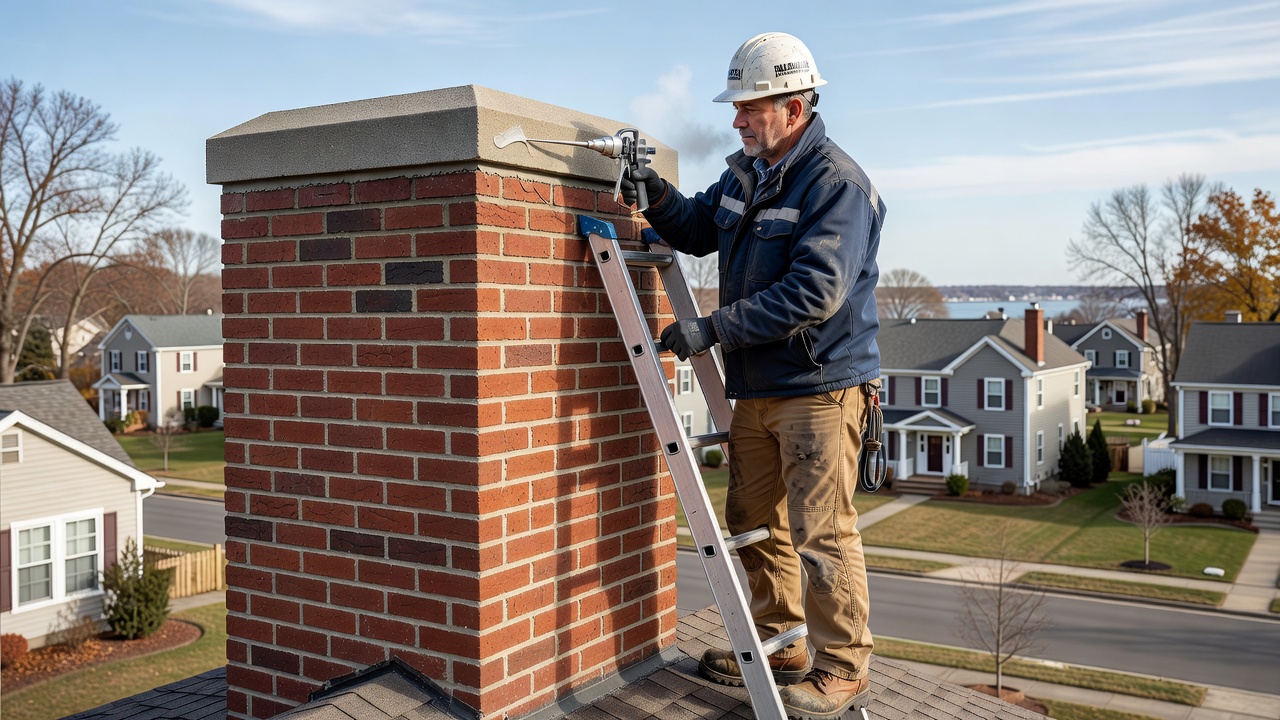
Essential Chimney Waterproofing Roosevelt NY: 2026 Guide for Oceanside Residents
How many Oceanside homeowners have watched a contractor slap a coat of paint on a chimney crown and call it waterproofing? More than we can count. Chimney waterproofing in Roosevelt NY and across Nassau County is one of those services that looks simple from the street but has a lot of ways to go wrong especially when the person doing it doesn’t fully understand what they’re dealing with.
Water is the single most destructive force working against a masonry chimney on Long Island. Salt air off the Atlantic, freeze-thaw cycles from November through March, and the clay-heavy soil that shifts under our older foundations all of it conspires against brick and mortar. Getting chimney waterproofing right the first time means hiring someone who actually knows the difference between a symptom and a cause.
A Call We Got from Oceanside Last Winter
A homeowner on Brower Avenue in Oceanside called us in January after spotting rust-colored streaks running down the front of her chimney and white chalky deposits around the firebox opening inside. She’d already had another company out the previous spring. That crew had applied a waterproof sealant directly to the brick but used a non-vapor-permeable product. Within one freeze-thaw cycle, trapped moisture had nowhere to escape. The face of the brick started spalling, and now she was looking at a repair bill bigger than the original job.
We hear variations of that story regularly, from Baldwin to Freeport to Rockville Centre. The problem isn’t that waterproofing doesn’t work. The problem is that it’s easy to sell and hard to do correctly.
Problems We Actually Find During Waterproofing Assessments
Spalling Brick and Deteriorating Mortar Joints
Spalling where the face of a brick flakes or pops off is almost always the result of moisture that has already penetrated the masonry. The freeze-thaw cycle in Nassau County is brutal on soft or aged brick. When water enters a porous brick and freezes, it expands roughly 9% in volume. That force cracks brick from the inside out.
The diagnostic question here isn’t just “is the brick spalling?” It’s “why did the moisture get in, and is there existing damage underneath?” We probe mortar joints, test brick absorption rates, and check whether the spalling is isolated or traveling up from the base. Applying waterproofer over already-spalling brick without repointing first is one of the most common mistakes we see, and it will fail within a season.
The fix: repoint deteriorated mortar joints first, replace any mechanically compromised brick, then apply a vapor-permeable masonry waterproofant. That sequence matters enormously.
A Cracked or Crumbling Chimney Crown
The crown the concrete or mortar cap that seals the top of the chimney is the first defense against direct rainfall. On older homes in Oceanside and Merrick, we often find crowns that were built from plain mortar mix instead of a proper concrete blend. They crack within a few years. Once cracked, water channels straight down into the chimney chase and into the masonry.
Symptoms include efflorescence (the white mineral deposits), staining on interior walls near the fireplace, and deteriorating flashing. A proper crown repair uses a crown coat sealant or full replacement with a concrete mix, sloped to shed water away from the flue. This step has to come before any waterproofing of the brick below.
Failed or Improper Flashing
Flashing is the sheet metal seal between the chimney and the roof deck. In our experience, flashing failures account for a significant share of the water intrusion calls we get from homeowners in Valley Stream, Lynbrook, and along the South Shore generally. Roofers sometimes caulk over flashing gaps instead of replacing the metal and that caulk fails within a year or two.
During a waterproofing assessment, we always inspect the step and counterflashing independently. If the metal has corroded, if the counterflashing isn’t set into a reglet in the masonry, or if a previous contractor used the wrong caulk, no amount of surface waterproofing will stop the leak. The fix is proper lead or galvanized steel flashing, correctly integrated with the roofing material.
Non-Vapor-Permeable Sealants Applied to Brick
This is the mistake that burned the Oceanside homeowner we mentioned earlier. Masonry breathes. Moisture vapor moves through brick in both directions. If you seal the surface with a product that blocks vapor transmission like standard exterior paint or an elastomeric coating not rated for masonry you trap moisture inside the wall. It has to go somewhere, and when temperatures drop, it destroys the brick from within.
The CSIA recommends using only vapor-permeable, breathable waterproofing products specifically formulated for masonry chimneys. We use products that repel liquid water from the outside while still allowing vapor to escape from within. That distinction is not marketing language. It is the difference between a job that holds and one that causes new damage.
Deteriorated Chimney Cap or No Cap at All
A missing chimney cap is an open invitation for rainwater, nesting animals, and debris. We’ve pulled out enough pigeon nests from Garden City and Hempstead chimneys to know how common this is. A cracked or rusted cap allows water to run directly into the flue, saturating the liner and the surrounding masonry. Before any waterproofing work, the cap should be inspected and replaced if compromised.
How to Choose the Right Contractor for This Work
This is where we want to be direct, because the chimney waterproofing space has its share of operators who know how to quote a job but not necessarily how to do one.
The New York State Department of State requires contractors performing home improvement work including chimney repairs and waterproofing to hold a valid home improvement contractor license. Ask for it before anyone touches your chimney. You can verify any contractor’s license at dos.ny.gov. This is not a formality. It is your legal protection if work is done improperly.
Beyond licensing, ask these questions before you hire:
- What product will you use, and is it vapor-permeable?
- Will you inspect the crown, flashing, and cap before applying any waterproofing?
- Do you repoint deteriorated mortar joints as part of this job, or is that a separate charge?
- What does your warranty cover, and for how long?
Red flags: a quote given over the phone without a physical inspection, no written contract, pressure to pay in full before the job starts, or a contractor who can’t name the specific product they plan to use. According to HomeAdvisor and Angi data, chimney waterproofing jobs in the NY metro area typically run $300 to $600 or more depending on chimney size, condition, and the extent of prep work required. A quote dramatically below that range say, $150 for a full waterproofing job should raise questions about what’s actually being done.
We also recommend asking whether the contractor carries general liability insurance and workers’ compensation coverage. On a two-story home in Oceanside, Freeport, or anywhere along the South Shore, roof-level work carries real risk. You do not want that liability landing on your homeowner’s policy.
Can Water Damage Be Prevented Going Forward?
Yes, and it’s far cheaper than repairing it. The National Fire Protection Association and the CSIA both recommend annual chimney inspections, and those inspections are the natural catchpoint for early water intrusion signs before they become structural problems. A technician who gets on your roof once a year can spot a hairline crown crack, catch loose flashing, and identify early spalling before it spreads.
Properly applied chimney waterproofing on sound masonry typically lasts five to ten years depending on exposure conditions. Oceanside’s proximity to the water means your chimney faces salt-laden air year-round, which accelerates deterioration faster than you’d see in an inland town like Uniondale. Factor that into your maintenance planning.
If you’re in Oceanside, Baldwin, Rockville Centre, or anywhere across Nassau County and you’re not sure whether your chimney is protected against moisture intrusion or if a previous waterproofing job has you worried contact our team at Roosevelt Chimney LLC for a free, no-pressure inspection. We get on the roof, look at every component, and tell you exactly what we find before recommending any work.
Frequently Asked Questions
How much does chimney waterproofing cost in the Oceanside, NY area?
Most chimney waterproofing jobs on Long Island run between $300 and $600, based on current HomeAdvisor and Angi market data for the NY metro area. That range reflects a chimney in reasonably sound condition that needs a proper waterproofant applied after basic crown and cap inspection. If there’s significant spalling, failed flashing, or mortar repointing needed first, costs increase accordingly. Any quote you receive should be based on a physical inspection, not a phone estimate.
How do I know if my chimney needs waterproofing or a more serious repair?
Common warning signs include white staining (efflorescence) on the brick, rust streaks, moisture or staining on interior walls near the fireplace, flaking or spalling brick faces, and visible cracks in the crown. These symptoms sometimes indicate surface moisture intrusion that waterproofing can address but they can also point to failed flashing, a cracked liner, or structural damage that needs to be corrected first. A professional inspection is the only way to know for certain, and skipping it risks applying waterproofing over a problem that will only get worse.
Will my homeowner’s insurance cover chimney water damage?
Most standard homeowner’s insurance policies in New York exclude damage caused by gradual water intrusion or deferred maintenance. Sudden and accidental damage like a storm that cracks a crown may be covered depending on your policy terms. Insurers increasingly ask for documentation of regular chimney maintenance when evaluating claims. An annual inspection record from a licensed contractor is the best protection you have, both for your chimney and for your coverage standing. Check your specific policy language or speak with your agent for clarification.
Related from Roosevelt Chimney: Chimney Sweep in Roosevelt, NY — Clearing the Way for a Safer Fire Sea · Essential Level 2 Chimney Inspection Roosevelt NY