
Chimney Liner Installation in Roosevelt, NY
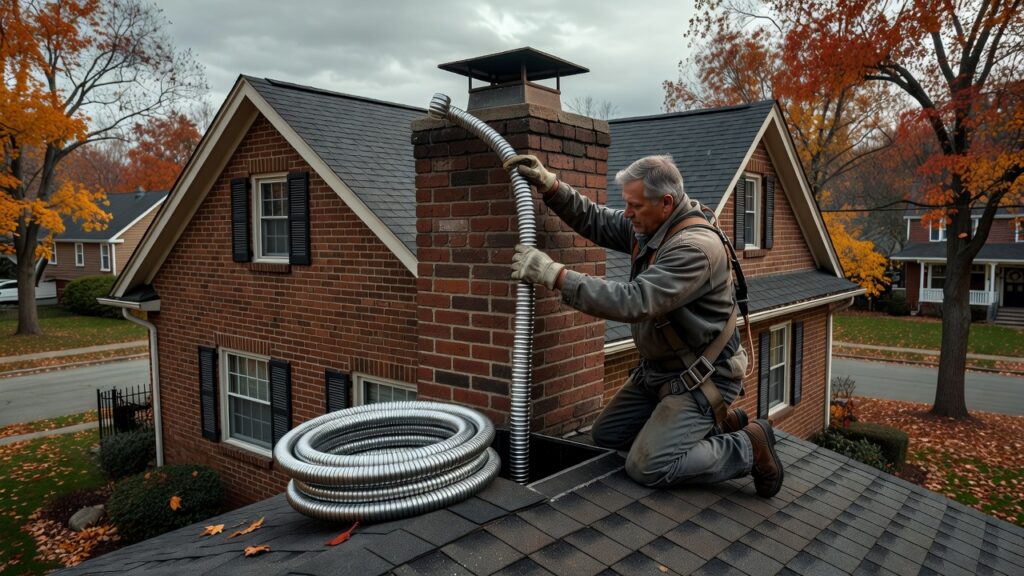
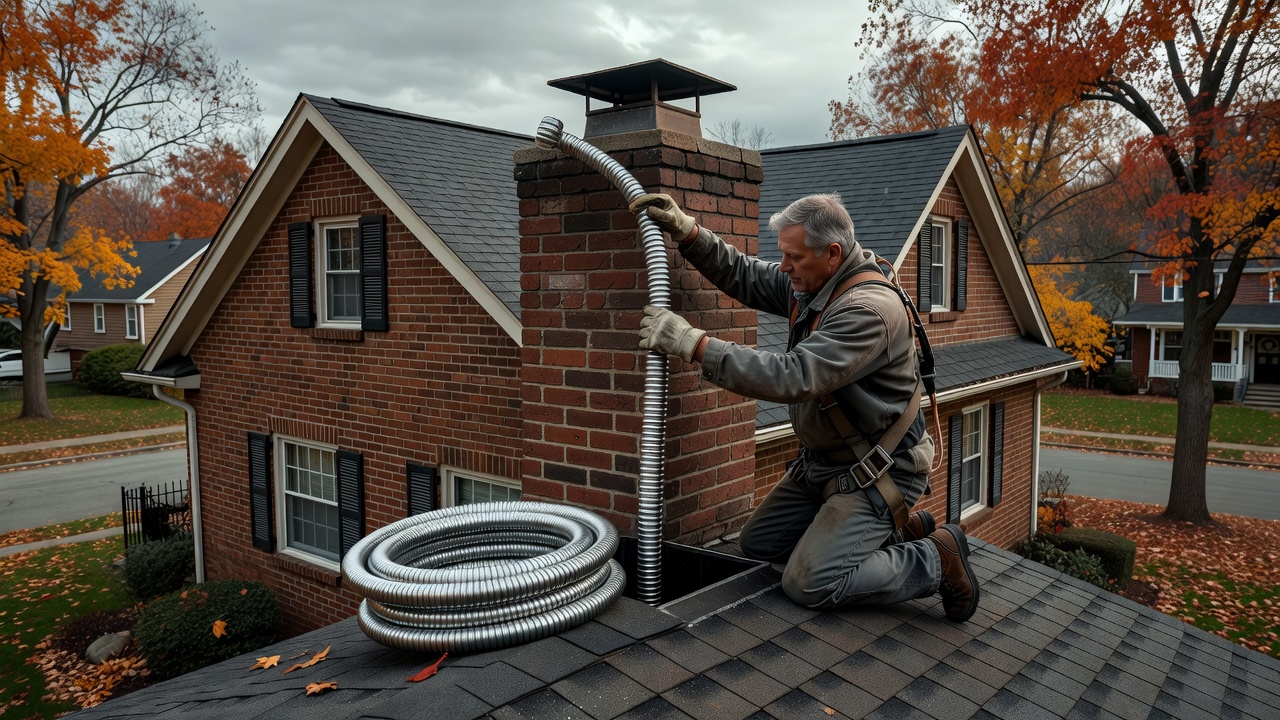
A chimney liner is the protective channel inside your flue that directs combustion gases out of your home and keeps heat from reaching the surrounding masonry and framing. Without a sound liner, carbon monoxide can seep into living spaces and heat transfer can start a fire inside a wall you’d never see coming. Chimney liner installation either replaces a damaged original liner or adds a code-compliant liner where none exists and it’s one of the more common jobs we handle for homeowners across Roosevelt and the rest of Nassau County.
A lot of the houses along Nassau Road and the side streets feeding off Babylon Turnpike were built in the 1940s and 1950s. Those old clay-tile liners have had eighty-plus years of freeze-thaw cycles, and many of them are cracked, offset, or partially collapsed. If your last Level 2 inspection flagged your flue, or if you’ve switched from oil heat to gas and nobody has touched the liner since, this page explains what the installation involves and what you should expect from us.
The Problem an Old or Missing Liner Actually Causes
Clay tile liners don’t fail all at once. A hairline crack lets hot gases wick into the mortar joints. Over a few heating seasons the mortar softens, more gaps open, and now you have a flue that’s venting partly into the wall cavity instead of through the top of the chimney. That’s when people start noticing a faint smoky smell on cold mornings, or a carbon monoxide detector that keeps going off without any obvious source.
Gas appliances produce a cooler, wetter exhaust than wood or oil. When a large-diameter tile flue designed for oil heat is converted to a smaller-output gas furnace, condensate forms on the tile walls, mixes with sulfur compounds in the flue gas, and eats at the joints from the inside. The liner can look intact from above and still be compromised halfway down. A stainless-steel liner sized correctly for the appliance solves both the diameter mismatch and the condensation problem at the same time.
What Chimney Liner Installation Looks Like from Start To Finish
We start with a camera inspection before any liner goes in. That tells us the exact interior dimensions, confirms how many offsets are in the flue, and shows us whether the existing tile needs to come out or can stay as a structural surround. There’s no point in ordering materials before we know what we’re working with.
Most residential installations in Roosevelt use a flexible 316-alloy stainless steel liner. The 316 alloy handles the acidic condensate from gas appliances better than the 304 alloy does. For wood-burning fireplaces and high-heat applications, we use a heavier rigid or corrugated liner depending on what the flue geometry allows.
The liner is measured and cut to the exact flue length, connected to a top plate at the crown and a connector or appliance adapter at the base, then insulated with a poured or wrap insulation to keep flue gases above the dew point all the way up. Insulation also improves draft, which matters in a tighter modern home where negative pressure can cause backdrafting.
Once everything is set, we run the appliance, check draft, and do a final visual to confirm the connections are tight and the top plate is properly sealed. The whole job on a straight single-flue chimney typically takes one day. A chimney with multiple offsets or an existing tile liner that needs mechanical removal takes longer, and we’ll tell you that upfront when we quote the work.
What’s Included in Our Liner Installation
- Pre-installation camera scan of the existing flue
- Flexible 316-alloy stainless steel liner (or rigid liner where appropriate)
- Top plate with rain cap
- Appliance connector or fireplace adapter at the base
- Full-length liner insulation
- Draft test and appliance check after installation
- Written documentation suitable for homeowner records or insurance purposes
If the chimney crown is cracked or the cap is missing, we’ll note it and can take care of it the same day rather than scheduling a second visit. We’d rather tell you about a $200 crown repair while we’re already set up on the roof than have you call us back six months later when water has gotten into the new liner system.
Why Roosevelt Homeowners Call Us Specifically
We work in Roosevelt and the surrounding parts of Nassau County regularly enough to know what the local housing stock looks like. Most of the calls we get are from people with brick chimneys serving 1950s oil-to-gas conversions or older wood-burning fireplaces that haven’t been touched in years. We stock liners in the common residential sizes so we’re not waiting on a special order to finish your job.
We carry liability insurance and our work meets the standards in NFPA 211, which is the code the National Fire Protection Association publishes for chimney systems. When a homeowner in Nassau County needs documentation for an insurance claim or a home sale, we can provide a written inspection report alongside the installation record.
Common Questions About Chimney Liner Installation
My house in Roosevelt already has clay tile in the flue. Do I need to remove it before installing a stainless liner?
Not always. If the tile is stable and the flue dimensions allow a properly sized liner to pass through, the flexible stainless liner can go right inside the existing tile. The tile acts as a structural surround, which is fine. If the tile is severely deteriorated or blocking the flue, we’d remove it first. The camera scan before installation tells us which situation you have.
How long does a stainless-steel liner last in a Nassau County climate?
A 316-alloy liner installed correctly and used with a properly sized appliance should last 20 years or more. The Long Island climate is hard on masonry, but stainless steel handles the freeze-thaw cycles well. Annual sweeping and a quick visual inspection every year or two are the main things that protect the liner’s lifespan.
Will installing a new liner affect my homeowner’s insurance?
It can work in your favor. Some insurers in New York ask for documentation that the flue serving a heating appliance is lined and up to code, particularly after an oil-to-gas conversion. We provide written records of the installation that you can submit to your insurer. We’d suggest checking with your insurance agent before and after the work, since coverage terms vary by policy.
Schedule Your Liner Installation
If you’ve had an inspection that flagged your flue, recently converted your heating system, or just haven’t had the chimney looked at in several years, give us a call. We’ll start with the camera scan, give you a straightforward quote, and schedule the installation at a time that works for you.
Call Roosevelt Chimney or use our online form to book your chimney liner installation in Roosevelt, NY. We’ll tell you exactly what your flue needs before any work begins.
Related from Roosevelt Chimney: Chimney Sweep in Roosevelt, NY — Clearing the Way for a Safer Fire Sea · Chimney Inspection in Roosevelt, NY · Chimney Repair in Roosevelt, NY