Chimney Cleaning Nassau County
Chimney cleaning in Nassau County means removing creosote, soot, and debris from the flue so your fireplace or heating appliance can vent combustion gases safely out of the house. Without it, a single heating season’s worth of creosote buildup is enough to ignite a chimney fire that can reach 2,000°F inside the flue. For homeowners across Nassau County, including Roosevelt and the surrounding South Shore communities, annual cleaning is the most direct thing you can do to lower that risk.
Roosevelt Chimney serves Nassau County from our base in Roosevelt, NY. We know the housing stock here: a lot of mid-century capes and colonials with older clay-tile flues, homes that sat vacant during oil-heat transitions, and fireplaces that haven’t been swept since the previous owner. That context shapes how we approach every job.
Why creosote is the main hazard in Nassau County homes
Creosote forms when wood smoke cools against the flue walls before it exits the chimney. Nassau County’s compact lots and shorter chimneys mean flues sometimes don’t draw as strongly as taller stacks in other regions, which can accelerate buildup. There are three stages: a dry, flaky residue (easy to brush away), a tar-like coating (harder to remove), and a glazed, rock-hard deposit that requires chemical treatment before mechanical cleaning can do much.
Most homeowners who call us after a dormant season have Stage 1 or Stage 2 buildup. A standard annual cleaning handles both. If you’ve been burning unseasoned wood or using the fireplace every day through a cold winter, we may find Stage 3 deposits and will tell you plainly what that means for the next steps.
Beyond creosote, we also clear animal nests, leaf debris, and any masonry fragments that have fallen into the flue. Those blockages are less dramatic than a chimney fire, but carbon monoxide can back up into living spaces when they’re present.
What chimney cleaning includes when we do it
- A visual inspection of the firebox, damper, and accessible flue sections before we start brushing, so we know what we’re working with
- Drop cloths over the hearth and surrounding floor; a high-efficiency vacuum attached to the firebox opening to capture dislodged soot before it reaches the room
- Rotary or hand-brush cleaning of the full flue length, sized to your specific liner diameter
- Removal of all debris, bagged and taken off the property
- A post-cleaning check of the damper operation and a look at the smoke chamber shelf for buildup that brushes can’t reach from below
- A written summary of what we found and whether anything warrants a follow-up inspection or repair
We don’t clean and disappear. If we see a cracked tile, a deteriorating mortar joint, or a damper that doesn’t seat properly, we say so on the spot. Whether you want us to address it or get a second opinion is your call.
How the cleaning process actually works
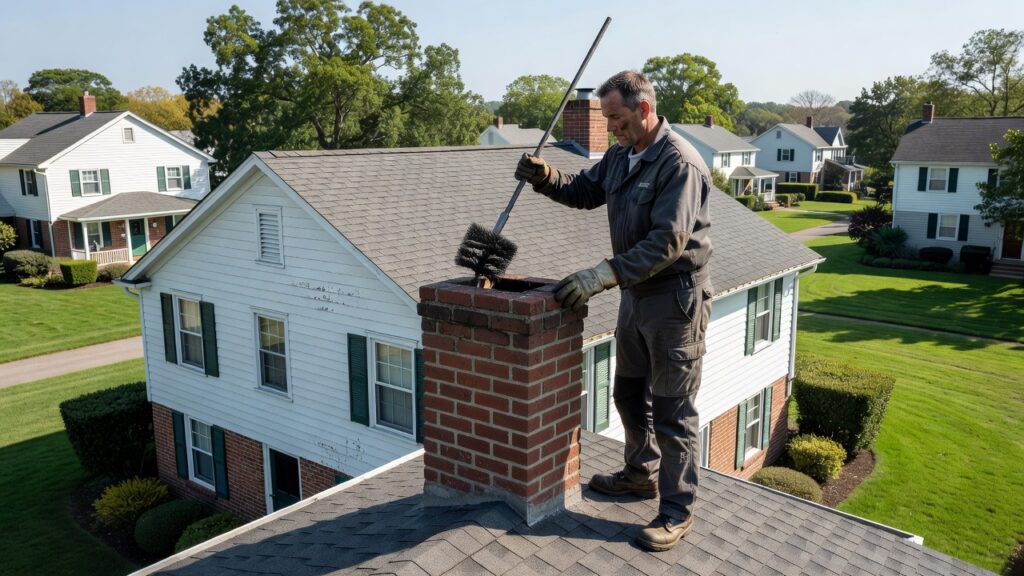
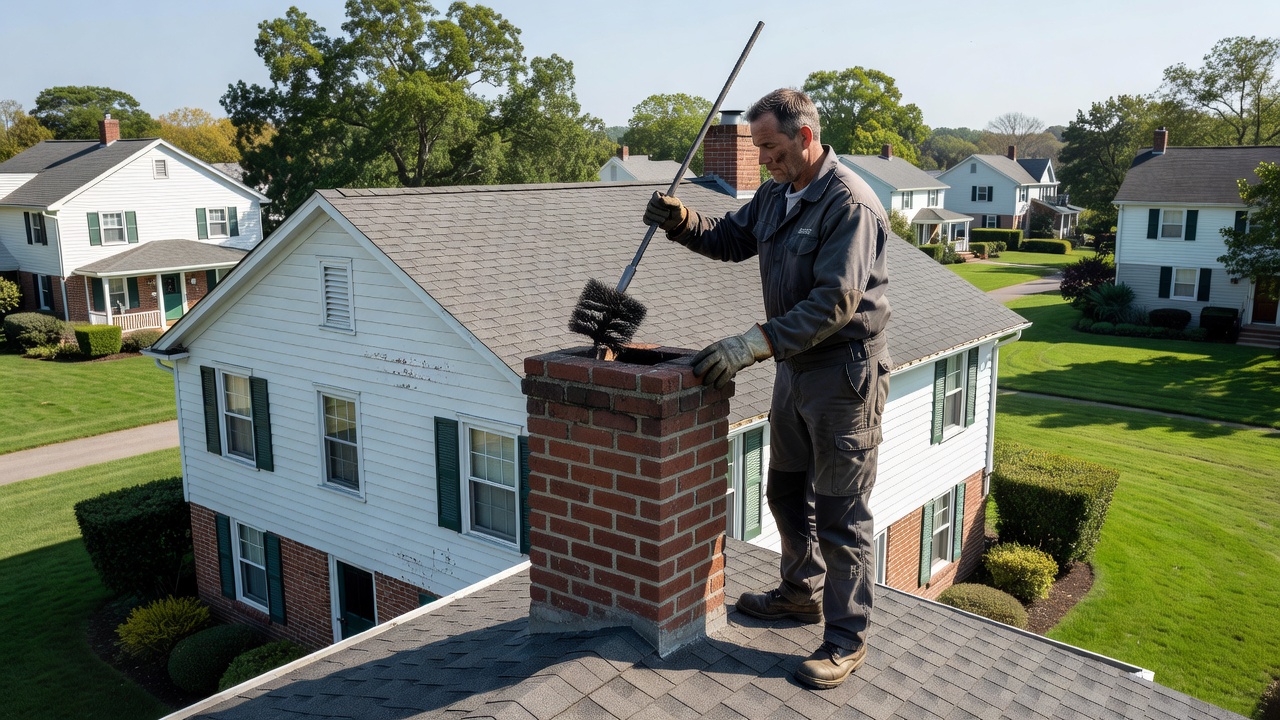
The job starts on the roof. We check the chimney crown, cap, and the top few feet of the flue for any obvious damage or animal activity before attaching brushes. Working top-down pushes debris toward the firebox rather than scattering it unpredictably inside the flue.
Once the brush passes are done from above, a technician works from the firebox level, using the vacuum system to collect what’s come down and doing a close-up check of the smoke shelf, which is a horizontal ledge just above the damper where soot and debris tend to collect and is often missed in a quick sweep.
The whole process on a standard single-flue fireplace runs about 45 minutes to an hour. A home with two fireplaces or a furnace flue alongside a fireplace flue takes longer. We give you a time estimate when you book.
Who should schedule a cleaning this year
The National Fire Protection Association (NFPA 211) recommends chimneys be inspected and cleaned at least once a year. In practice, certain situations make it more urgent:
- You burned more than a cord of wood last winter
- You’ve moved into the home recently and have no records of prior sweeping
- The fireplace smells like smoke even when it isn’t in use, which suggests a draft problem and possible debris blockage
- You noticed dark staining on the ceiling above or near the fireplace
- You heat primarily with a wood-burning insert or pellet stove, which can produce concentrated deposits in shorter flue runs
- The chimney hasn’t been used in several years, since animals find dormant flues attractive for nesting
A Nassau County company, not a franchise dispatch
Roosevelt Chimney is based in Roosevelt, on the Nassau County South Shore. When you call, you’re talking to the people who will show up. We’re not a call center routing jobs to whoever is available in a three-county radius that week.
We’ve cleaned chimneys on Centennial Avenue and across the wider Nassau County area long enough to recognize the common issues in the local housing stock: the older, unlined flues in pre-1950s homes, the single-wall metal inserts that were installed without proper clearances, and the chimneys that were converted from oil to gas but still have the original clay liner. Those specifics matter for how a cleaning is approached and what to check afterward.
Frequently Asked Questions about Chimney Cleaning in Nassau County
How often do Nassau County homeowners actually need a chimney cleaning?
Once a year is the standard recommendation for any chimney in active use. Nassau County’s mix of older housing and proximity to the coast doesn’t change that baseline, but if you’re burning a lot of wood in a compact flue or had a bird nest last spring, don’t wait for the annual reminder. Two cleanings in a heavy-use year is reasonable.
Can a chimney cleaning be done in summer, or should I wait until fall?
Summer is a good time for it. Scheduling before the fall rush means you’re not waiting three weeks for an opening when you want to use the fireplace in October. Creosote doesn’t change between July and September, so there’s no technical reason to delay. We’re available year-round.
My house has a gas fireplace. Does it still need to be cleaned?
Gas appliances produce less soot than wood, but the flue still needs to be checked and cleared annually. Spiders, insects, and debris can block a gas flue just as effectively as creosote blocks a wood-burning one, and a blocked gas flue is a carbon monoxide problem. A cleaning combined with a Level 1 inspection covers both.
Schedule Chimney Cleaning in Nassau County
If your chimney hasn’t been cleaned this year, or you’re not sure when it last was, call Roosevelt Chimney to book a cleaning. We serve Roosevelt and Nassau County, show up on time, and give you a straight account of what we found. No upselling, no vague language about “potential hazards” without showing you exactly what we mean.
Call us or use the contact form on this site to set a date. Most appointments are available within one to two weeks, and sooner if your schedule is flexible.
Related from Roosevelt Chimney: Chimney Sweep in Roosevelt, NY — Clearing the Way for a Safer Fire Sea · Chimney Sweep West – Roosevelt, NY’s Seasonal-Ready Cleaning Service · Chimney Inspection in Roosevelt, NY