
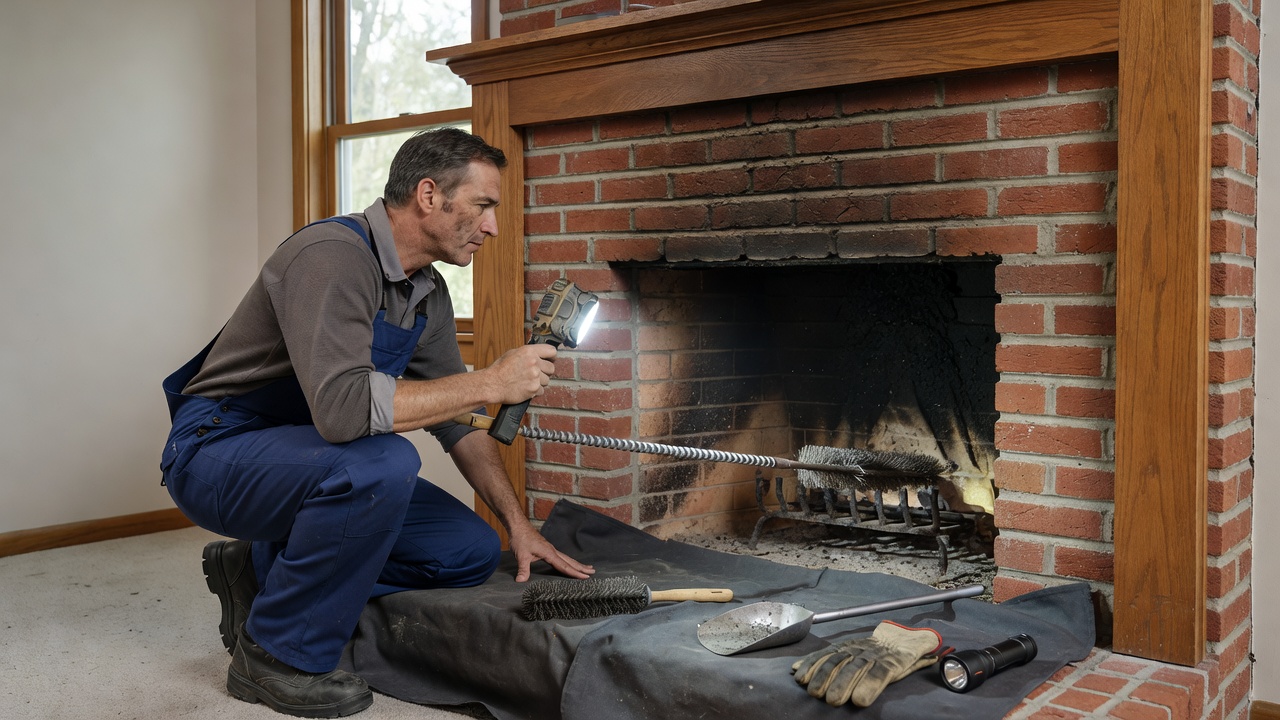
Fireplace Cleaning in Roosevelt: What You Can Do Yourself and What You Shouldn’t
About 25% of all home fires in the United States trace back to heating equipment, and the U.S. Consumer Product Safety Commission points directly at poorly maintained chimneys as a major factor. That number doesn’t surprise us. We’ve pulled enough creosote and cleared enough blocked flues across Nassau County to know exactly how fast a neglected fireplace becomes a hazard. But we also know that not every fireplace cleaning job requires a crew. Some of it genuinely is homeowner territory. The problem is knowing where that line is.
Fireplace cleaning in Roosevelt homes covers a wider range of tasks than most people realize, and sorting out which ones belong on your to-do list versus ours can save you money or, more importantly, save your house.
A Roosevelt homeowner who thought she was keeping up
Last February, a homeowner on Nassau Road in Roosevelt called us after noticing a smoky odor whenever she ran her gas insert. She’d been vacuuming the firebox every month, wiping the glass, and figured that was enough. When our tech pulled the damper and shone a light up the flue, there was a solid third-stage creosote deposit about six feet above the smoke shelf, the kind that looks like a tar crust and doesn’t come off with a standard brush. She’d been doing the visible portion’s upkeep perfectly. The part she couldn’t see was the part that mattered.
That’s the pattern we see all over Roosevelt, and equally in Freeport, Baldwin, and Rockville Centre. Homeowners who are genuinely trying to maintain their fireplace, but working only within the range of what’s visible from a standing position at the hearth.
What you can actually handle yourself
There are real tasks a careful homeowner can do between professional visits. We’d rather you do them than skip them waiting for a scheduled appointment.
Firebox ash removal. Once the ash bed builds past two inches (keep about an inch for insulation on wood-burning fireplaces), scoop it into a metal container with a lid. Cold ash only. A shop vac with a HEPA filter works well for fine dust. This doesn’t require a professional and should be done regularly through the burning season.
Glass door cleaning. The white calcium haze and black soot on glass panels come off with a purpose-made fireplace glass cleaner or a paste of ash and damp newspaper. Do this when the firebox is cold. It’s cosmetic maintenance, not safety maintenance, but it tells you something: if the glass is blacking up heavily after just a few fires, your wood is probably wet or your air supply is restricted.
Damper check. Stand in the firebox, look up, and open and close the damper by hand. It should move freely and seal reasonably well. If it’s stuck, corroded, or you feel significant cold air when it’s closed, note it for your next professional visit. Don’t force a cast-iron throat damper. They crack.
Visual firebox inspection. Look at the firebrick and mortar joints. Hairline cracks in the mortar are normal expansion cracks. Gaps wider than a credit card, crumbling brick faces, or any black discoloration creeping out of the joints onto the breast of the fireplace are warning signs worth a call.
Where DIY stops and a real problem starts
This is the part that gets people into trouble. The tasks below look manageable from the outside but have a real failure cost if they go wrong.
Creosote beyond the smoke shelf
You can wipe down the smoke shelf yourself with a damp cloth and a brush. What you cannot assess or clean adequately is the flue above it. The CSIA recommends that chimneys be inspected at least once a year and cleaned whenever creosote deposits exceed 1/8 inch. Most homeowners who rent a brush kit from a hardware store in Hempstead or Valley Stream and run it up from below are guessing at coverage. They can’t see what they’re hitting, can’t confirm what they dislodged fell into the firebox and not into a shelf or offset, and they have no way to identify third-stage glazed creosote that needs chemical treatment before brushing. We’ve been called after DIY sweeps where the homeowner felt good about the job and we found significant deposits still sitting in the flue.
Smoke rollout: not just a draft problem
If your fire smokes into the room, most guides say “open a window, your house is too tight.” Sometimes that’s true. But in the older ranch and cape cod homes that make up a lot of Roosevelt’s housing stock, smoke rollout can mean a blocked flue, a deteriorated liner, a negative pressure issue from an exhaust fan, or a firebox opening that’s proportioned wrong relative to the flue area. These have different fixes. Opening a window might mask one cause and do nothing for another. A proper diagnosis involves measuring the firebox opening, checking flue area, testing draft with an anemometer, and inspecting for obstructions. That’s not a YouTube project.
Spalling brick and failing mortar joints in the firebox
Repointing exterior chimney mortar is sometimes sold online as a DIY job. Inside the firebox is different. The mortar between firebricks must be refractory-grade material rated for direct flame contact. Standard masonry mortar will crack out within a season. We regularly reline fireboxes in Uniondale and Merrick where a well-meaning homeowner used the wrong product and created gaps that allowed heat to transfer into the framing behind the fireplace wall. The fix at that point is substantially more involved than the original repair would have been.
Damper replacement
Swapping a throat damper seems straightforward until you realize that on many of the mid-century homes common in Roosevelt and Garden City, the damper frame is cast into the masonry. Removal without damage to the firebox throat takes experience and the right tools. Top-mount dampers, which we often recommend as a replacement option, require correct sizing to the flue, proper sealing, and a cable run that doesn’t interfere with the liner. Installed wrong, a top-mount damper either leaks air badly or restricts draft.
Gas fireplace or insert maintenance beyond cleaning the glass
Gas appliances have thermocouple assemblies, pilot orifices, venting requirements, and in some cases flex connectors that age and crack. The National Fire Protection Association’s Standard 211 covers the inspection requirements for these systems, and the standards are explicit that venting and gas line components need professional evaluation annually. Cleaning the burner ports with a can of compressed air is a homeowner task. Anything involving the gas valve, the venting termination, or the condition of the liner is not.
Pricing you can expect in the Roosevelt area in 2026
Homeadvisor and Angi data puts the national average chimney sweep at $150 to $375, but in the New York metro area, complex jobs or heavy creosote removal typically run $300 to $600 or more. A Level 2 inspection, which is required any time you’ve had a chimney event like a fire or before buying or selling a home in Oceanside or Lynbrook, adds to that cost but is not optional when the situation calls for it. The New York State Department of State requires that chimney contractors performing liner installations hold a home improvement contractor license. Always ask for that license number before anyone does liner work or major repairs on your home.
Can any of this be prevented?
Most of it, yes. Burn only seasoned hardwood with a moisture content below 20%. Keep fires burning hot rather than smoldering. Have the flue swept and inspected every year, ideally in September or early October before the heating season starts, not in the middle of January when you’ve already burned 30 fires. Install a rain cap with a spark arrestor if you don’t have one. Those steps eliminate the majority of the serious problems we diagnose across Nassau County each year.
If you’re in Roosevelt or anywhere nearby in Nassau County and you’re not sure which category your fireplace situation falls into, reach out to our team for an inspection or estimate. We’ll tell you honestly what needs a professional and what you can handle yourself. That’s the kind of conversation we’d want to have if we were the homeowner.
Frequently Asked Questions
How much does fireplace cleaning cost in Roosevelt, NY?
For a standard wood-burning fireplace sweep in the Roosevelt and Nassau County area, expect to pay roughly $200 to $400 in 2026 for a basic cleaning and Level 1 inspection. Jobs with heavy creosote buildup, liner issues, or that require a Level 2 inspection run higher, often $400 to $600 or more. Prices vary by chimney height, accessibility, and the condition of the flue.
How often should I have my fireplace cleaned?
The CSIA recommends an inspection every year and a cleaning whenever creosote deposits reach 1/8 inch or more. For most Long Island homeowners who burn wood regularly through the winter, that means an annual sweep, typically in the fall before the first fires of the season. Gas fireplaces still need an annual inspection even if they don’t produce creosote, because venting and gas components require professional review.
Does homeowners insurance cover chimney cleaning or chimney fire damage?
Standard homeowners insurance policies in New York generally do not cover the cost of routine chimney cleaning, as that’s considered maintenance. If a chimney fire causes structural damage to your home, many policies will cover the resulting damage, but insurers can and do deny claims when they determine that the fire resulted from a failure to maintain the chimney. Keeping records of annual inspections and cleanings is the best documentation you can have if a claim ever comes up.
Related from Roosevelt Chimney: Chimney Sweep West – Roosevelt, NY’s Seasonal-Ready Cleaning Service · Chimney Inspection in Roosevelt, NY