
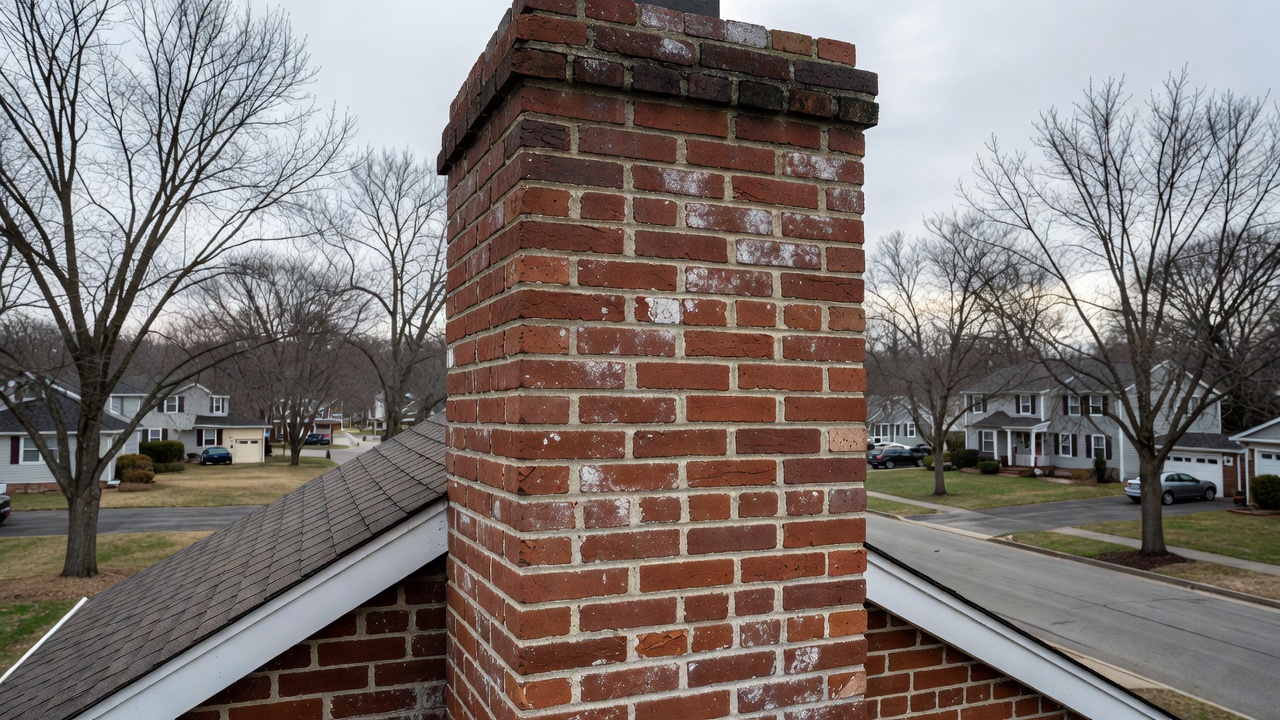
Chimney Inspection West Hempstead NY: Warning Signs You Shouldn’t Wait On
A chimney inspection in West Hempstead NY is something most homeowners schedule once a year, but the honest truth is that your chimney will often tell you it needs attention before that annual appointment rolls around. Knowing what to look for, and knowing what it means, can be the difference between a routine cleaning and a five-figure repair.
A call we got from Hempstead Turnpike last November
A homeowner just off Hempstead Turnpike in West Hempstead called us in mid-November. She’d noticed a faint smoky smell in her living room when the fireplace wasn’t in use, and there was a dark stain spreading down the front of the firebox. She’d been watching it for two weeks, hoping it would go away on its own. It didn’t. When our crew got there, we found a cracked flue liner and a significant creosote buildup that had started seeping through the masonry. That two-week wait cost her more than it had to.
West Hempstead’s older housing stock, a lot of it built in the 1950s and 1960s, means chimneys here are aging. The combination of salt air coming off the South Shore, freeze-thaw cycles every winter, and decades of use adds up. We see these problems regularly, from Linden Boulevard over toward the Nassau County line and across into neighboring Baldwin and Valley Stream. The warning signs below are real, observable things you can check right now.
Warning signs that mean schedule an inspection this week
White staining on the exterior masonry
This is called efflorescence. It happens when water moves through the brick and deposits salt crystals on the surface. It’s not just cosmetic. Water is getting inside the masonry, and once the freeze-thaw cycle starts working on those cracks, the damage accelerates. If you’re seeing white chalky patches on the outside of your chimney, don’t sit on it.
A smoky smell with no fire burning
This is one of the more common calls we get from homeowners in West Hempstead and over in Uniondale. If your living room smells like a campfire and the fireplace has been cold for days, the flue isn’t drafting properly. The most likely culprits are a stuck damper, a downdraft issue, or creosote buildup that’s partially blocking the flue. This is a call-a-pro-now situation, not a wait-and-see one.
Dark staining around the firebox opening
A little soot inside the firebox is normal. Dark, oily staining spreading outward onto the surround or the facing is not. It usually means smoke is rolling out of the firebox instead of going up the flue. That points to a draft problem, a blockage, or a damaged smoke chamber. The U.S. Consumer Product Safety Commission reports that heating equipment fires, including chimney-related fires, account for roughly 25% of all home fires annually. Smoke in the wrong place is worth taking seriously.
Crumbling mortar joints or spalling brick
Walk out to your yard and look up. Cracked or missing mortar between bricks, or bricks that are flaking and breaking apart, are signs the chimney’s structure is compromised. On a West Hempstead colonial with a tall exterior chimney, deteriorating mortar joints can allow water into the structure and, eventually, carbon monoxide into the home. If the damage is above the roofline, you need a professional evaluation before the next heating season.
Rust on the damper or firebox
Open the damper and look up. If you see rust on the damper plate or along the firebox walls, moisture has been getting in. A rusted damper often won’t seal properly, which means cold air drafts down the flue all winter and conditioned air escapes all summer. It also signals that the chimney cap or flashing may already be failing.
Shaling flue tiles in the firebox
Reach into the firebox floor and check for thin, flat pieces of clay tile. If you find any, your flue liner is breaking apart. The NFPA reports that 27% of all home heating fires between 2016 and 2020 were caused by chimneys that had not been cleaned, and a deteriorating liner is one of the fastest ways to create a fire hazard. This is a stop-using-the-fireplace-immediately situation.
A damaged or missing chimney cap
Look at the top of your chimney from the yard or an upper window. There should be a cap covering the flue opening. If it’s missing, bent, or rusted through, rain, birds, and debris have direct access to your flue. We’ve pulled nesting material out of chimneys in Rockville Centre and Baldwin that had been there for multiple seasons. A missing cap is an easy fix that prevents a much bigger problem.
Moisture or water stains on interior ceilings near the chimney
Water stains on the ceiling or wall adjacent to the chimney are a sign the flashing or the chimney crown has failed. This is not a roofing problem that will wait until spring. Water inside the chimney structure causes damage year-round. The CSIA recommends annual inspections precisely because this kind of slow, hidden deterioration is often invisible until it’s already expensive.
What to ask before you hire anyone
West Hempstead homeowners have no shortage of people who will hand you a flyer offering a $49 chimney inspection. That number should give you pause. A real inspection, done properly with a camera if warranted, takes time and costs more than that. The New York State Department of State requires chimney sweeps performing certain types of chimney liner installations to hold a home improvement contractor license. Ask for it. Ask for proof of liability insurance. Ask whether the company is CSIA-certified.
Red flags to watch for:
- No written estimate before work begins
- Pressure to approve repairs on the spot, the same day as the inspection
- No physical address or verifiable local presence
- Reluctance to share a license number or certificate
- A price that’s dramatically lower than other quotes with no explanation
We’ve had customers in Merrick and Oceanside come to us after getting burned by low-ball door-knockers who left incomplete work and no way to follow up. Verify before you hire.
Call vs. Keep an Eye on it
Some things on this list are genuine emergencies. Shaling flue tiles, heavy smoke rollout, or water stains growing on a ceiling near the chimney mean stop using the fireplace and call us. Others, like surface efflorescence on a chimney you’re not currently using, can be scheduled within a few weeks. The difference is whether the defect puts your home or your family at risk right now.
If you’re unsure which category your situation falls into, the safer answer is always to have someone look at it. A chimney inspection is not a big commitment of time or money. Repairing the damage that follows a chimney fire, or patching a ceiling after a winter of water infiltration, is.
Schedule Your Chimney Inspection in West Hempstead Today
Our crew works throughout West Hempstead and the surrounding Nassau County communities, including Valley Stream, Baldwin, Lakeview, Uniondale, and Garden City. We’re a licensed, insured local company with real roots in this area. If you saw something on this list that fits your chimney, call Roosevelt Chimney LLC now or contact us online to set up an inspection. We’ll give you a straight answer and a written assessment, no pressure, no surprises.
Frequently Asked Questions
How much does a chimney inspection cost in West Hempstead NY?
A standard Level 1 chimney inspection in the West Hempstead area typically runs between $150 and $300 depending on the chimney’s condition and accessibility. HomeAdvisor and Angi data from 2024 to 2025 shows the national average for a chimney sweep ranges from $150 to $375, with complex jobs in the NY metro area often running $300 to $600 or more. Be cautious of offers significantly below that range, as they often lead to upselling or incomplete work.
How often should I get a chimney inspection in Nassau County?
The CSIA recommends that chimneys be inspected at least once per year, regardless of how often you use the fireplace. In Nassau County, where older homes and coastal weather conditions accelerate wear, annual inspections catch problems like flashing failure, mortar deterioration, and creosote buildup before they become costly repairs.
Does homeowners insurance cover chimney repairs in New York?
It depends on the cause. Most standard homeowners insurance policies in New York will cover chimney damage resulting from a sudden event like a fire, a storm, or a lightning strike. Gradual deterioration from lack of maintenance is generally not covered. This is one reason we emphasize annual inspections: documented maintenance history can matter when you file a claim.
Related from Roosevelt Chimney: Chimney Sweep West – Roosevelt, NY’s Seasonal-Ready Cleaning Service