
Essential Fireplace Inspection Roosevelt NY: 2026 Guide for Freeport Residents
Most homeowners in Freeport don’t think about their fireplace until the first cold snap hits in November and by then, inspection schedules are backed up three weeks deep across Nassau County. We’ve seen what happens when small warning signs get ignored through the summer and fall. Some of those calls come in as emergencies. This guide is for the homeowner who wants to get ahead of it.
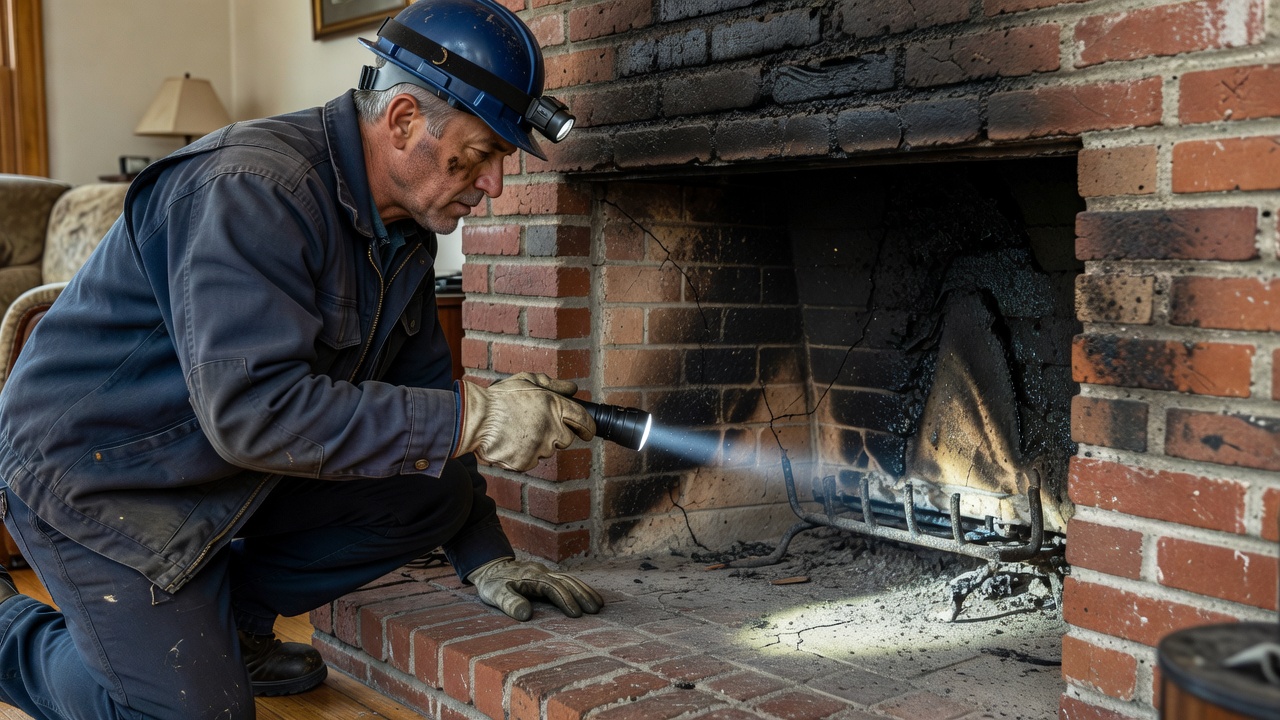
A fireplace inspection in Roosevelt NY isn’t just a formality. It’s the difference between a fireplace that works safely and one that’s quietly building toward a problem. If you’re in Freeport or anywhere nearby, here’s what your fireplace might already be telling you.
A Call That Came in Too Late Last Season
Last October, we got a call from a homeowner on South Ocean Avenue in Freeport. She’d noticed a faint smoky smell in her living room for a few weeks but assumed it was just the fireplace “waking up” for the season. When our crew arrived, we found a partially collapsed flue tile and third-degree creosote buildup that had been accumulating for at least two seasons without a cleaning. The fireplace had been used the week before we got there.
That’s not a rare story. We hear versions of it every fall from Freeport to Baldwin to Merrick. The warning signs were there. They just hadn’t been recognized.
Warning Signs Your Fireplace Needs Inspection Now
Every sign on this list is something you can actually observe yourself no tools required. If you’re checking off more than one or two, stop using the fireplace and call a licensed chimney professional before the next fire.
1. A Smoky Smell When the Fireplace Isn’t in Use
This is the one that gets dismissed most often. If you smell smoke in your living room on a warm afternoon in August, that odor is coming from somewhere creosote deposits being activated by heat and humidity, a cracked flue allowing outside air in, or a damaged damper. Whatever the source, it means something is wrong with the system.
2. Black Staining on the Firebox Wall or Surrounding Brickwork
A little discoloration inside the firebox is normal. Dark, oily staining that spreads above the damper throat, onto the mantel, or onto the wall around the fireplace opening is not. It usually means smoke is rolling back into the room rather than exhausting up the flue a draft problem, a blockage, or a damaged smoke chamber.
3. White Staining (Efflorescence) on the Outside of the Chimney
Those white mineral streaks on your chimney’s exterior brick are water forcing its way through the masonry. On a Long Island home where salt air off the Atlantic accelerates masonry wear in Freeport, Oceanside, and Island Park efflorescence shows up faster than it does inland. Left alone, it leads to spalling brick and structural damage.
4. A Damper That Sticks, Won’t Seal, or Is Missing Altogether
You should be able to open and close your damper completely by hand. If it’s seized, corroded, or feels like it’s not seating properly when closed, heated air is escaping your home year-round and outside air and pests are getting in. A failed damper also means smoke has no controlled pathway out during a fire.
5. Visible Cracks in the Firebox or on the Chimney Crown
Stand back and look at your chimney from the yard. If you can see gaps in the mortar joints, cracks running across the crown, or pieces of brick that look like they’ve shifted, that’s not cosmetic wear. That’s structural. The CSIA recommends at minimum an annual inspection specifically because flue liners and fireboxes develop cracks that aren’t visible during casual use and those cracks are exactly how house fires start.
6. Pieces of Tile, Debris, or Granules in the Firebox
If you’re finding small chunks of clay tile, chunks of mortar, or sandy debris in the firebox floor, your flue liner is breaking down. The liner is what contains the heat and combustion gases inside the chimney. When it deteriorates, those gases including carbon monoxide have pathways into your home’s structure. This is not a wait-and-see situation.
7. A Strong Chemical or Burning Smell After a Rain
Wet creosote has a distinctive acrid, chemical smell. If rain rolls through and you suddenly notice it, you’ve got significant creosote deposits in the flue that are reacting with moisture. According to the NFPA, 27% of all home heating fires between 2016 and 2020 were caused by chimneys that had not been cleaned, and creosote buildup is the primary fuel in virtually every chimney fire.
8. Animals or Unusual Sounds in the Chimney
Scratching, chirping, or rustling from inside the flue means something got in usually through a missing or damaged chimney cap. Birds, squirrels, and raccoons are common in older neighborhoods across Hempstead, Roosevelt, and Uniondale. Beyond the nuisance, nesting material is a serious fire hazard, and a dead animal can produce carbon monoxide conditions inside a sealed flue.
Why the Timing of Your Inspection Actually Matters
The busiest period for chimney inspections in Nassau County runs from mid-September through mid-November. Crews are booked out, and emergency calls which cost more and get scheduled around existing work stack up. HomeAdvisor data shows that chimney inspection and sweep costs in the NY metro area typically run $300 to $600 or more for jobs involving heavy creosote or liner damage, and emergency or rush pricing in peak season pushes that higher.
The homeowners who call us in July and August get better scheduling, more thorough inspections because we’re not rushing between six jobs a day, and repairs completed before the season starts. Waiting costs money and, more importantly, it costs safety margin.
The New York State Department of State requires chimney sweeps performing liner installations and certain chimney work to hold a home improvement contractor license. Before anyone works on your fireplace, verify their license at dos.ny.gov. We are fully licensed and carry insurance ask us anytime.
What a Proper Fireplace Inspection Covers
A Level 1 inspection the standard annual inspection recommended by the CSIA for chimneys in continuous use covers the accessible portions of the firebox, the damper, the smoke chamber, and a visual assessment of the flue. If we see indications of damage, we’ll recommend a Level 2 inspection, which uses a camera system to examine the full interior of the liner. We walk every customer through what we find and what it means before we recommend anything.
We service homes throughout Freeport, Roosevelt, Baldwin, Merrick, Rockville Centre, Lynbrook, Valley Stream, and the rest of Nassau County. If you’re not sure whether your fireplace is ready for this season, that uncertainty alone is reason enough to schedule a look.
Ready to stop guessing? Contact our team at Roosevelt Chimney LLC for a fireplace inspection and honest assessment no pressure, no overselling. We’ll tell you exactly what we find and what it will take to make it safe.
Frequently Asked Questions
How much does a fireplace inspection cost in Freeport or Roosevelt, NY in 2026?
For a standard Level 1 fireplace inspection in Nassau County, homeowners should expect to pay in the range of $150 to $300 depending on the company, the age of the chimney, and whether a cleaning is bundled in. If the inspection reveals significant creosote buildup or liner damage requiring a Level 2 camera inspection, costs typically climb into the $300 to $600 range. Emergency or same-day service during peak fall season runs at the higher end. Getting inspected in the off-season summer, or early fall is almost always the better financial move.
How often does a fireplace need to be inspected?
The Chimney Safety Institute of America recommends that all chimneys and fireplaces be inspected at least once a year, regardless of how often you use them. Even a fireplace used just a handful of times per winter can develop creosote deposits, animal intrusions, or moisture damage over the off-season. Annual inspections are the standard and for older homes in Freeport and surrounding Nassau County communities, we’d say they’re non-negotiable.
Will my homeowner’s insurance cover chimney damage or a chimney fire in New York?
This depends on your specific policy and the cause of the damage. Most standard homeowner’s insurance policies in New York will cover sudden and accidental damage like a chimney fire but they typically exclude damage caused by lack of maintenance or gradual deterioration. If an adjuster determines your chimney fire resulted from creosote buildup that should have been addressed through routine cleaning, your claim could be denied or reduced. Keeping a record of annual inspections is one of the simplest ways to protect your coverage. Ask your insurer directly about your policy’s chimney-specific language.
Related from Roosevelt Chimney: Essential Dryer Vent Cleaning Roosevelt NY