
Trusted Chimney Sweep Near Me Roosevelt: 2026 Guide for Lakeview Residents
Roughly one in four home fires in the United States involves heating equipment, and a poorly maintained chimney is one of the most common culprits. That number comes from the U.S. Consumer Product Safety Commission, and it’s not abstract when you’re talking about the older wood-framed homes that line the streets of Lakeview and the surrounding Hempstead Turnpike corridor. Every fall we get calls from homeowners who aren’t sure whether they can knock out some chimney maintenance themselves or whether they genuinely need a chimney sweep near me Roosevelt-area crews like ours to come out and do it right. The answer is: it depends, and we’d rather give you an honest breakdown than talk you into something you don’t need.
A Lakeview Homeowner Who Almost Got It Half Right
Last September, a homeowner on Lakeview Road called us after spending a weekend trying to clean her own fireplace. She’d watched a few videos, bought a brush kit from a home improvement store, and done a decent job clearing loose soot from the smoke chamber. But when our crew arrived for the inspection she’d scheduled afterward, we found a section of clay tile liner that had cracked something she had no way to see without a camera. She’d been planning to light her first fire of the season that evening.
That’s the thing about chimney work. Some of it a careful homeowner absolutely can handle. Other parts carry real consequences when they go wrong, and the damage isn’t always visible from the firebox opening. Here’s how we break it down honestly.
What a Capable Homeowner Can Safely Handle
We’re not going to pretend every task requires a professional. These are jobs where a diligent homeowner with the right supplies can do meaningful, legitimate maintenance:
- Clearing the firebox and ash pit. Scooping out ash, wiping down the firebox walls, and keeping the area below the damper clean is basic upkeep. Let ash cool for at least 72 hours before handling it.
- Checking and operating the damper. Open it, close it, feel for resistance or wobble. A stiff damper handle or a damper that won’t seal fully is something you can notice yourself and it tells you to call someone before the heating season starts.
- Inspecting the firebox visually. Look at the mortar joints between the firebrick. If you see gaps wider than a credit card, hairline cracks spreading across multiple bricks, or chunks of mortar on the floor of the firebox, document it with a photo and flag it for a professional.
- Keeping the cap and crown visible from the ground. Binoculars from the yard work fine. You’re looking for a missing or rusted cap, visible gaps at the crown, or dark staining down the exterior masonry that suggests water infiltration. You can’t repair these yourself, but spotting them early saves money.
- Basic draft testing. Light a small piece of newspaper near the open damper before your first fire. Smoke should draw upward immediately. If it rolls back into the room, something is off call us before proceeding.
Where the Line Is: Call a Pro for These
The CSIA recommends that chimneys be inspected at least once per year and cleaned whenever creosote deposits exceed one-eighth of an inch. That threshold sounds simple, but accurately measuring creosote depth inside a flue especially in the upper flue sections above the smoke chamber requires a light source, a mirror or camera, and the experience to know what you’re looking at. Here’s where professional service isn’t optional:
Creosote Removal Beyond Stage One
Light, dusty soot is one thing. But glazed, tar-like Stage 2 or Stage 3 creosote requires chemical treatment and specialized rotary tools. Using the wrong brush on hardened creosote can dislodge liner fragments. We’ve seen this cause more damage than the original buildup, and we’ve cleaned up after exactly that scenario in homes from Oceanside to Baldwin.
Liner Inspection and Repair
Clay tile liners in Lakeview’s older colonials and capes develop cracks from thermal cycling over years of use. A camera scan what the industry calls a Level 2 inspection is the only way to assess the liner from the smoke chamber up through the crown. The NFPA reports that 27% of all home heating fires between 2016 and 2020 were caused by chimneys that had not been cleaned or properly maintained. A cracked liner is a direct path for combustion gases and heat to reach wood framing. No homeowner YouTube video covers this adequately.
Crown, Cap, and Flashing Repairs
Working at roof height with masonry materials and metal flashing is genuinely dangerous without proper equipment and training. Beyond the fall risk, improper crown patching with the wrong mortar mix will fail within one freeze-thaw cycle Long Island winters are hard on masonry, and 2026 is shaping up to be no different. Getting this wrong wastes money and accelerates deterioration.
Relining
Installing a stainless-steel liner requires permits in Nassau County, and under New York State Department of State rules, contractors performing liner installations must hold a valid home improvement contractor license. Homeowners should always verify licensing before hiring anyone. This isn’t work that should be DIY’d, period both for safety and for homeowner’s insurance purposes.
The Real Risk of Getting It Wrong
We want to be direct here because this matters. A homeowner who cleans the visible soot but misses a blocked flue or a cracked liner is in a more dangerous position than someone who did nothing at all because they believe the job is done. Carbon monoxide exposure and chimney fires often follow inspections that were incomplete, not inspections that were skipped entirely.
HomeAdvisor and Angi data for 2024-2025 puts the national average for a professional chimney sweep between $150 and $375, with jobs in the New York metro area, including Nassau County communities like Rockville Centre, Valley Stream, Garden City, and Uniondale, often running $300 to $600 depending on condition. That’s real money. But a chimney fire that damages the liner, framing, or triggers a claim can cost tens of thousands. The math isn’t close.
We also get calls from homeowners in Merrick and Lynbrook who hired unlicensed sweeps they found on neighborhood apps. When those jobs go sideways, the licensed contractor who comes in to assess and repair is working with no documentation of what was done previously. It costs more to fix, every time.
What a Professional Cleaning Actually Involves, Start to Finish
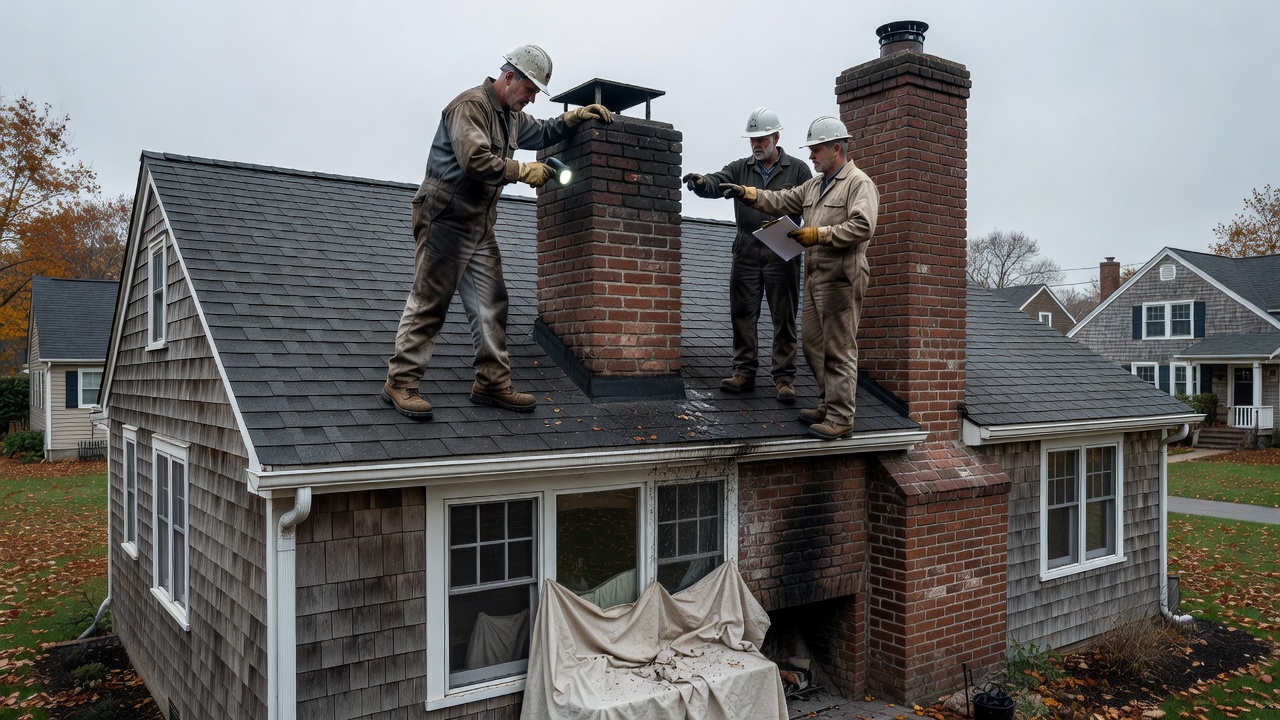
Because the question we hear most often is “what am I even paying for,” here’s what our crew does on a standard visit. We set up drop cloths at the hearth and mask the firebox opening to keep dust out of the living space. We inspect the firebox and damper before touching anything. We run brushes from the top down through the full flue height while a vacuum at the base captures the fallout. We do a final visual pass with a light to check liner condition, look at the crown and cap from the roof, and check the exterior masonry for efflorescence or spalling. Then we walk you through what we found, show you photos when there’s something to see, and give you a written summary. A sweep without that documentation is just a guess that the job was done.
Schedule Before the Season Starts
If you’re a homeowner in Lakeview, Freeport, Roosevelt, or anywhere in Nassau County and you haven’t had your chimney looked at this year, now is the time to get on the schedule. Our crew is local, licensed, and we’re not going to sell you work you don’t need. If your chimney is clean and sound, we’ll tell you that. Learn more about our full chimney inspection and cleaning services or call us directly to set up a free estimate. We know these neighborhoods and we know these houses that experience shows up in the quality of the work.
Frequently Asked Questions
How much does a chimney sweep cost in the Lakeview and Nassau County area in 2026?
For a standard cleaning and basic inspection, most homeowners in Nassau County are paying between $300 and $500 in 2026. Jobs involving heavy creosote buildup, camera inspections, or repairs to the crown or liner will run higher. We give straightforward written estimates before any work starts so there are no surprises.
How do I know if my chimney needs cleaning or just an inspection?
The CSIA’s guideline is that any chimney used regularly should be inspected annually and cleaned whenever creosote exceeds one-eighth of an inch of buildup. If you burned more than a cord of wood last season or noticed a smoky smell in the house, cleaning is likely overdue. An inspection tells you which service you actually need and sometimes it’s neither, which we’ll tell you honestly.
Does homeowner’s insurance cover chimney repairs in New York?
Most standard homeowner’s policies in New York cover sudden, accidental damage like a chimney fire but explicitly exclude damage from lack of maintenance or gradual deterioration. This is exactly why annual inspections matter: documented, professional maintenance creates a paper trail that protects you if you ever need to file a claim. Work done by unlicensed contractors often voids coverage entirely, so always verify licensing before hiring.
Related from Roosevelt Chimney: Honest Chimney Sweep Lakeview NY · Chimney Inspection in Roosevelt, NY
Pingback: Trusted Chimney Sweep Roosevelt NY: 2026 Guide for Freeport Residents – Roosevelt Chimney