
Published November 4, 2026
Fireplace Inspection Roosevelt NY: Warning Signs You Shouldn’t Ignore This Season
Is your fireplace ready for winter, or is it quietly building up a problem you haven’t noticed yet? A fireplace inspection in Roosevelt, NY isn’t just a box to check before you light the first fire of the season. It’s how we catch the kind of damage that turns a cozy evening into a dangerous one. We’ve worked on chimneys all over Roosevelt, Freeport, Baldwin, and Uniondale, and the warning signs below come straight from what we find on actual service calls.
A Real Call from Nassau Road
Last November, a homeowner on Nassau Road in Roosevelt called us because she kept smelling something smoky in the living room even when the fireplace wasn’t in use. She’d had the same fireplace for eleven years and never had it professionally inspected. When we got up on the roof and ran the inspection, we found a cracked clay-tile flue liner, a deteriorated smoke chamber, and a creosote deposit thick enough that the CSIA would classify it as a Level 3 hazard. None of it was visible from the firebox opening. The fix wasn’t cheap, but catching it before she lit a fire that winter was the right outcome.
That call is not unusual. Most of the serious problems we find were brewing for years before the homeowner knew anything was wrong.
Warning Signs That Mean You Need an Inspection Now
Some of these you can spot yourself. Others you can hear or smell. Any one of them is enough reason to schedule a professional fireplace inspection before you use the fireplace again.
1. White staining (efflorescence) on the exterior masonry
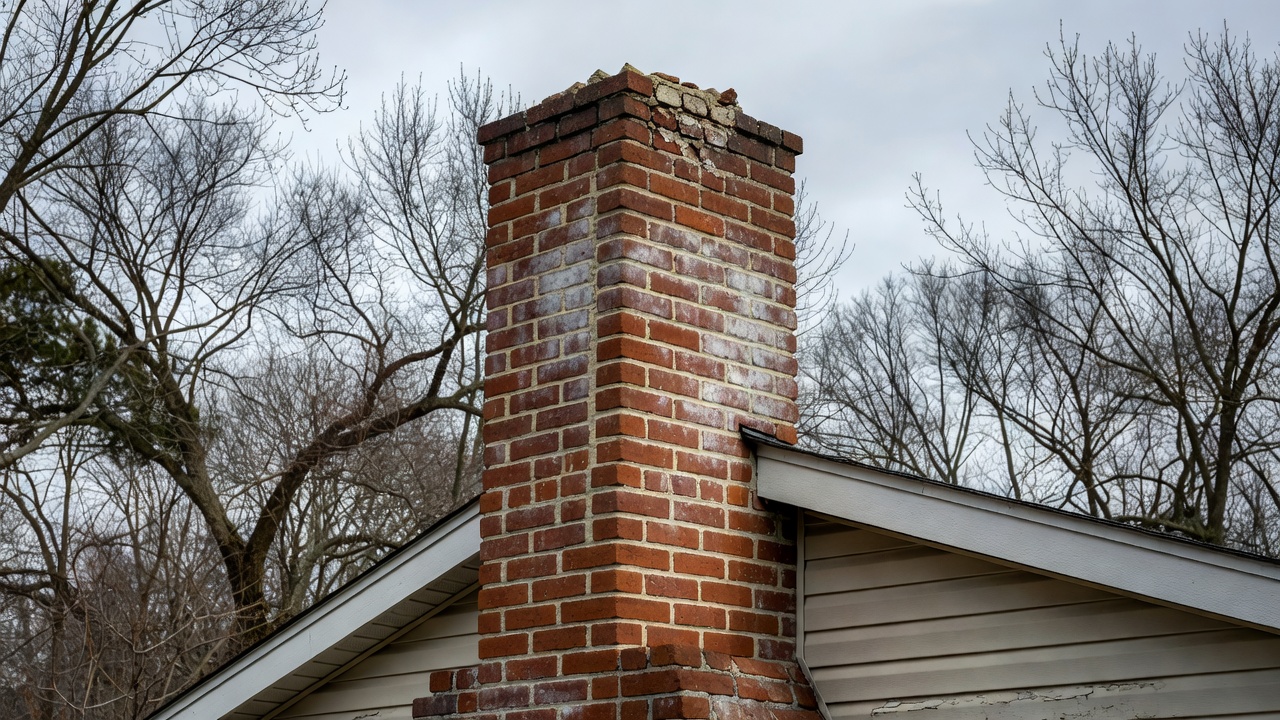
That chalky white powder on the outside of your chimney is salt being pushed out by water moving through the brick. It means moisture is getting inside the masonry, and in a Nassau County winter that freeze-thaw cycle will crack mortar joints fast. Keep an eye on it if it’s minor and new. Call us now if the staining is widespread or the mortar is visibly crumbling.
2. A smoky smell when the fireplace isn’t in use
This is what brought the Roosevelt homeowner above to the phone. If the house smells like a campfire in October and you haven’t burned anything, creosote or a draft problem is almost certainly the cause. This one doesn’t get better on its own. Call a pro now.
3. Black staining above the firebox opening
Soot that has rolled out of the firebox and deposited on the facing above the opening means smoke is not drafting up and out properly. It could be a blockage, a damper that’s failing to open fully, or a flue that’s too small for the firebox. Call a pro now.
4. Visible cracks in the firebox or smoke chamber
Grab a flashlight and look inside. If you can see cracks in the refractory panels, the mortar joints between firebricks, or the smoke chamber above the damper, those are pathways for heat and flame to reach combustible framing. The NFPA reports that failure to maintain chimneys is one of the leading contributing factors to home heating fires in the United States. This is exactly the kind of condition they’re talking about. Call a pro now.
5. Rust on the damper or firebox floor
Rust means water is getting in. That could be a deteriorated chimney cap, a cracked crown, or a failed flashing at the roofline. Water damage compounds quickly, especially in homes near the South Shore where salt air and humidity are part of daily life in Oceanside, Merrick, and Baldwin. Keep an eye on minor surface rust. Call us now if the damper plate is warped or won’t seal.
6. Loose or missing mortar around the crown
The chimney crown is the concrete or mortar cap that covers the top of the chimney stack. It’s the first thing to deteriorate. If you can see pieces of it on your roof or in the gutters, water is now getting directly into the flue system. Call a pro now.
7. A rumbling or popping sound during a fire
This is one homeowners often dismiss as the house settling or the firewood popping. What it can actually signal is a draft problem forcing combustion gases back down the flue, or debris in the flue catching heat. Keep an ear on a single pop here and there. Call us now if the sound is frequent or comes with any smell.
8. Animals or debris in the flue
We find bird nests, squirrel caches, and wasp nests in chimneys all across Hempstead, Rockville Centre, and Lynbrook every spring. Any obstruction in the flue is a carbon monoxide risk the moment you light a fire. The U.S. Consumer Product Safety Commission reports that heating equipment fires, including chimney-related fires, account for roughly 25% of all home fires annually. A nest you can’t see from the firebox is enough to put your household in that statistic. Call a pro now.
9. Spalling bricks on the chimney exterior
Spalling is when the face of a brick pops off, leaving a rough or pitted surface behind. If you’re finding brick fragments on the roof or in your yard, the structure of the chimney itself is weakening. Keep an eye on one or two weathered bricks. Call us now if the spalling is widespread or affects multiple courses.
What We Actually Do During the Inspection
When our crew arrives for a fireplace inspection at a Roosevelt home, we don’t just look down the flue from the top. We check the chimney connection, the baffle plates, the firebox interior, the smoke chamber condition, the damper operation, the flue liner from crown to smoke shelf, and the exterior masonry from the roofline down. If the flue liner warrants a closer look, we use a camera. HomeAdvisor data for the NY metro area puts professional chimney inspection and cleaning costs in the $300 to $600 range depending on the job’s complexity, and in our experience that’s accurate for most Roosevelt homes.
The New York State Department of State requires chimney professionals performing liner installations to hold a home improvement contractor license. We carry ours, and you should ask any company you hire to show theirs before work begins.
Schedule Your Fireplace Inspection in Roosevelt, NY Before the Cold Sets In
Roosevelt and Nassau County homeowners: if any of the warning signs above look familiar, don’t wait until January to find out you have a problem. Roosevelt Chimney LLC serves Roosevelt, Freeport, Baldwin, Uniondale, Hempstead, and the surrounding communities. Call us or use our contact form to schedule your inspection. We’ll give you an honest assessment of what’s there and what it will take to fix it, with no pressure and no surprises.
Frequently Asked Questions
How Often Should I Schedule a Fireplace Inspection in Roosevelt, NY?
The CSIA recommends that chimneys be inspected at least once per year, regardless of how often you use the fireplace. For Nassau County homes that burn wood regularly through the winter, an annual inspection before the heating season is the right schedule.
Does My Homeowner’s Insurance Require a Chimney Inspection?
Many homeowner’s insurance policies in New York require that chimneys be maintained and inspected regularly. If a fire is traced to a blocked or damaged flue that hadn’t been serviced, some carriers will deny the claim. Check your policy language and keep your inspection records. We can provide documentation of any inspection we complete.
What Is the Difference Between a Level 1 and Level 2 Inspection?
A Level 1 inspection covers accessible portions of the chimney and is appropriate for a fireplace that’s been used normally and shows no obvious problems. A Level 2 inspection is required after any change to the system, after a chimney fire, or when buying or selling a home. It includes a video scan of the flue interior. We’ll tell you which level is appropriate for your situation before we start.
Serving your area: For related services in nearby communities, see Perth Amboy Chimney and Chimney Experts in Rye.
Related from Roosevelt Chimney: Chimney Sweep in Roosevelt, NY — Clearing the Way for a Safer Fire Sea · Chimney Repair in Roosevelt, NY