
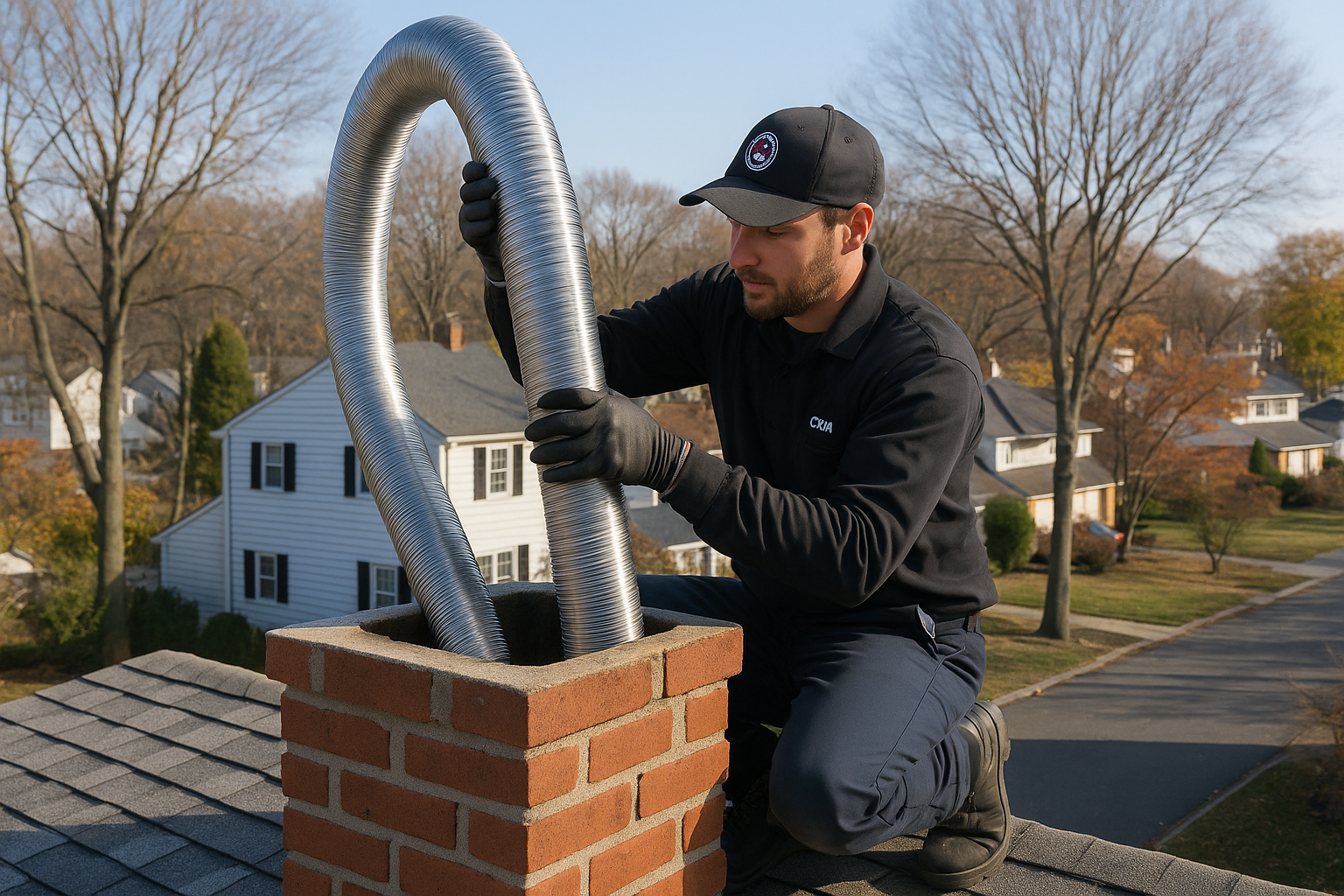
Essential Chimney Liner Installation Roosevelt NY: 2026 Guide for Merrick Residents
Most chimney fires don’t announce themselves. They start quietly, inside a cracked or absent flue liner, while a family in Merrick is watching television one floor below. By the time smoke backs up or a wall gets hot to the touch, the damage to the masonry, the framing, or worse is already done. Chimney liner installation in Roosevelt NY and throughout Nassau County is one of those jobs that homeowners put off until something goes wrong, and that delay is exactly what puts houses at risk.
This isn’t a sales pitch for our company. It’s a plain-language guide for Merrick residents who are shopping for a qualified contractor and want to know how to tell the difference between someone who actually knows this work and someone who owns a truck and a business card.
A Call We Got Last November From Merrick
A homeowner on a side street off Merrick Road contacted us in late fall 2025 peak fireplace season after another contractor had quoted her a new stainless-steel liner over the phone without ever setting foot on her property. The price sounded reasonable. What she didn’t know was that her 1960s colonial had a tile liner that had shifted at the second story offset, and without a camera inspection, nobody could have known that. Had she gone with that phone quote, the liner being sized wrong for her oil heating system would have been the least of her problems. A mismatched liner can cause carbon monoxide to spill into living spaces. We see this situation more than we’d like to admit, across Merrick, Baldwin, Freeport, and Wantagh.
Why a Damaged Liner Is Not a Cosmetic Problem
The liner is the only thing separating combustion byproducts carbon monoxide, superheated gases, burning creosote from your home’s wood framing and living space. The U.S. Consumer Product Safety Commission reports that heating equipment fires, including chimney-related fires, account for roughly 25% of all home fires annually. The National Fire Protection Association’s Standard 211 identifies failure to maintain chimneys, including their liners, as one of the leading contributing factors to those fires.
Older homes in Merrick and nearby Bellmore were largely built in the postwar boom, with clay tile liners that are now sixty to seventy years old. Those tiles crack from thermal cycling. If yours haven’t been inspected recently, you are essentially flying blind.
Credentials That Actually Mean Something
Not every person who climbs on a roof qualifies as a chimney professional. Here’s what to look for before you let anyone touch your flue:
- CSIA Certification: The Chimney Safety Institute of America certifies sweeps and technicians through a rigorous exam process. A CSIA-certified technician has demonstrated working knowledge of liner systems, codes, and safe installation practices. This is a baseline, not a bonus.
- NYS Home Improvement Contractor License: The New York State Department of State requires contractors performing chimney liner installations to hold a valid home improvement contractor license. Ask for the license number and verify it at dos.ny.gov before signing anything.
- Manufacturer Certification: For certain liner systems particularly flexible stainless-steel liners reputable manufacturers require installers to complete their own training. An uncertified installer can void the product warranty on day one.
- Liability Insurance and Workers’ Comp: If someone falls off your roof in Merrick and they don’t carry proper coverage, you may be liable. Ask for a certificate of insurance, not a verbal assurance.
Questions to Ask Before You Hire Anyone
A good contractor won’t be bothered by these questions. A bad one will get evasive. Ask every company you’re considering:
- Will you perform a Level 2 camera inspection before quoting the job? Any proper liner replacement requires knowing the exact condition of the existing flue, including offsets and obstructions.
- What liner material and gauge are you recommending, and why does it suit my heating appliance? A gas insert, an oil furnace, and a wood-burning fireplace each have different temperature and diameter requirements.
- Is your installation going to meet NFPA 211 clearance requirements? Ask this directly. If they hesitate or pivot, that tells you something.
- Do you pull permits for this work in Nassau County? Some jurisdictions require it. A contractor who skips permits skips accountability.
- Who is actually doing the installation — your employees or subcontractors? You want to know who’s on your roof.
- What does the quote include? Top cap, insulation wrap, connector installation at the appliance? Get it itemized in writing.
- Can you provide references from jobs in this area — Merrick, Wantagh, Seaford, or nearby towns?
Red Flags That Should End the Conversation
Price is not a red flag on its own. Cheap quotes combined with any of the following, though, should make you walk away:
A contractor who quotes over the phone without scheduling an inspection first is guessing. Liner jobs depend on chimney height, flue dimensions, appliance type, and existing condition none of which are visible from a driveway. A contractor who pressures you to decide the same day, especially by warning you your chimney is “about to collapse,” is using a scare tactic common in this industry. And any contractor who can’t produce a current NYS license number on request is not someone you should hire for this work, period.
The CSIA recommends that chimneys be inspected at least once per year that’s the baseline. A contractor who tells you inspections are unnecessary before a liner job is cutting corners from the first conversation.
How to Compare Quotes Without Getting Misled
HomeAdvisor and Angi data from 2024–2025 puts the national average for chimney liner installation between $150 and $375 for basic sweeps, with complex liner jobs in the NY metro area regularly running $900 to $2,500 or more depending on flue length, material, and access. When you receive multiple quotes for Merrick homes, make sure each quote specifies the same scope: liner gauge and diameter, length of run, whether insulation wrap is included, and cap replacement. A $700 quote and a $1,400 quote are not comparable if one includes a full relining with a UL-listed stainless system and the other is just the liner itself with no accessories.
Ask each contractor to put their warranty in writing both the product warranty and their labor warranty. A company that won’t stand behind installation work for at least one year shouldn’t be touching your chimney.
Talk to Roosevelt Chimney LLC Before You Decide
We work on homes throughout Merrick, Roosevelt, Freeport, Baldwin, Oceanside, and the rest of Nassau County. Every liner job we do starts with a camera inspection, not a phone guess. We carry full liability insurance, hold our NYS home improvement contractor license, and our technicians are CSIA-certified. If you’re getting quotes on chimney liner installation and you want a straight answer about what your flue actually needs, reach out to our team for a free on-site estimate. We’d rather spend an hour on your roof now than have you deal with a carbon monoxide call in January.
Frequently Asked Questions
How much does chimney liner installation cost for a typical Merrick home?
For most Nassau County homes, a two-story postwar colonial with a standard single flue chimney a stainless-steel liner installation runs roughly $1,000 to $2,200 in the current market, depending on flue height, liner diameter, and whether insulation wrap and a new cap are included. Homes with longer flue runs or difficult access, common in older Merrick neighborhoods, can push toward the higher end. HomeAdvisor and Angi data confirm that NY metro area liner jobs regularly exceed the national average cost. Always get a written, itemized quote after an in-person inspection.
Do I need a permit for chimney liner installation in Nassau County?
Permit requirements in Nassau County vary by municipality, but many local jurisdictions do require a permit for liner replacement, particularly when it involves a gas or oil appliance connection. Your contractor should know whether a permit is required for your specific town and should handle that process as part of the job. A contractor who tells you permits are never needed for this work in New York is either uninformed or avoiding accountability neither is a good sign.
What’s the difference between a stainless-steel liner and a cast-in-place liner for a Long Island home?
A flexible stainless-steel liner typically 316-grade alloy for oil or gas appliances, or 304 for wood is inserted down the existing flue and is the most common solution for relining older homes in Merrick, Baldwin, and Freeport. It’s cost-effective and works well when the chimney structure is otherwise sound. A cast-in-place liner (poured ceramic liner) is recommended when the existing flue has significant structural damage or unusual shapes that a flexible liner can’t properly seal. It costs more and takes longer, but it essentially rebuilds the interior of the flue from the inside out. A proper Level 2 camera inspection will tell you which approach your chimney actually needs.
Related from Roosevelt Chimney: Chimney Sweep in Roosevelt, NY — Clearing the Way for a Safer Fire Sea · Honest Chimney Repair Freeport NY
Pingback: Essential Dryer Vent Cleaning Roosevelt NY: 2026 Guide for Freeport Residents – Roosevelt Chimney