
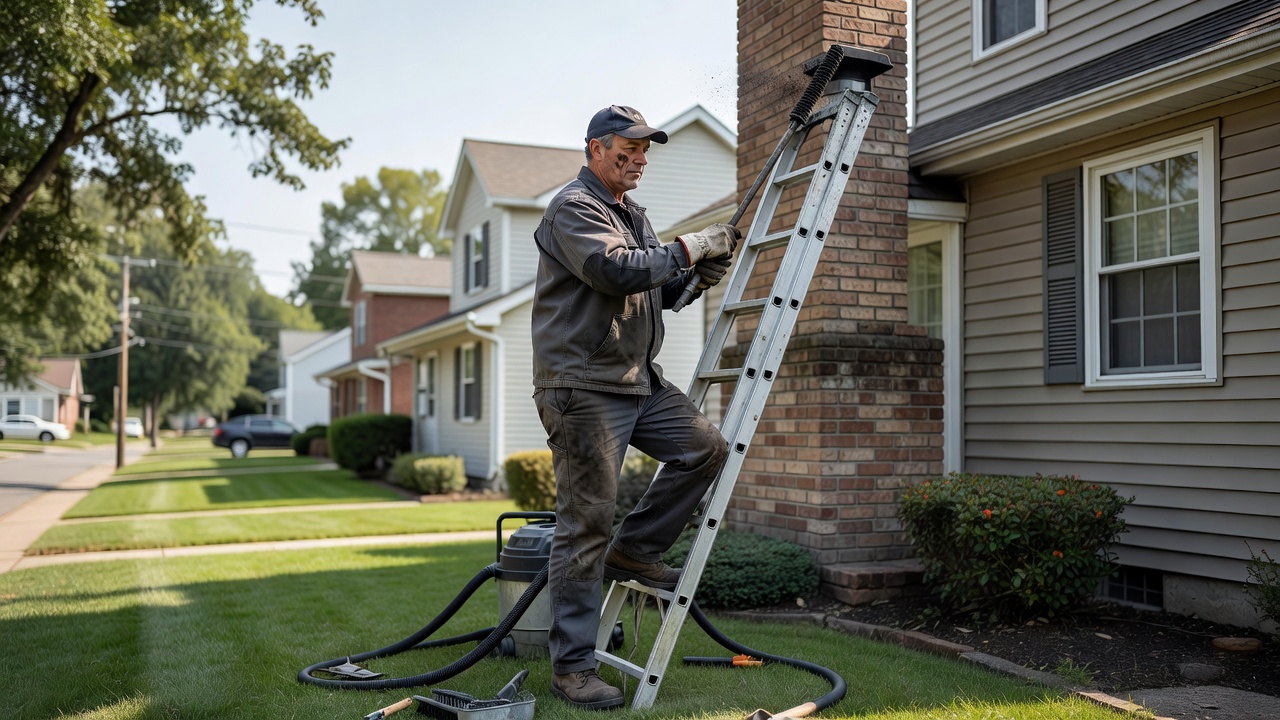
Trusted Chimney Sweep West Hempstead NY: 2026 Guide for North Merrick Residents
Some chimney problems are obvious smoke backing into the living room, a draft that won’t pull, a smell like a campfire that never quite leaves the house. Others hide for years behind a clean-looking firebox until something forces the issue. If you’re a North Merrick homeowner who burns wood or uses a gas fireplace, knowing what you can safely handle yourself and what genuinely needs a certified chimney sweep in West Hempstead NY and across Nassau County is the most useful thing you can learn before fire season.
A Call We Got Last November
A homeowner on Merrick Road near North Merrick’s border with Levittown called us the week after Thanksgiving. She’d lit her first fire of the season, noticed a heavy smell, and assumed the firebox just needed cleaning. Her nephew had swept the smoke shelf with a long-handled brush he found at a hardware store, and things seemed fine. Two fires later, she was seeing black staining on the ceiling above the mantel.
When we got there, the issue wasn’t a dirty flue. A section of terra cotta liner had cracked, probably from years of thermal expansion, and the nephew’s brush had knocked loose debris that was now blocking partial airflow. The creosote was modest, but the liner damage was creating a carbon monoxide pathway into her living space. That’s not a DIY fix — that’s a liner repair job that required a camera inspection first.
We tell this story because it captures exactly the line homeowners struggle to see: the difference between basic maintenance and a real structural or safety problem.
Common Problems, Diagnosed Honestly
Heavy Creosote Buildup
Symptoms: Slow-to-start fires, excessive smoke, a tar-like or campfire smell that lingers in the house even days after burning.
What’s actually happening: Creosote forms in three stages. Stage one is a light, flaky deposit — relatively easy to brush out. Stage two is a tar-like coating that brushes won’t touch without a rotary system. Stage three is a glazed, hardened crust that requires chemical treatment before mechanical removal. Most homeowners assume they have stage one. A lot of North Merrick homes that run their fireplaces heavily from October through February end up with stage two by spring.
The professional fix: A CSIA-certified sweep does a visual and video assessment before touching the flue. The CSIA recommends cleaning whenever deposits exceed 1/8 inch that’s thinner than most people imagine. Once the stage is confirmed, the right equipment gets selected. A consumer chimney brush on a stage two flue doesn’t clean it; it packs it in tighter.
Can it be prevented? Yes, partially. Burn only seasoned hardwood, keep fires hot enough to maintain draft, and don’t let smoldering fires run overnight. Annual sweeping prevents stage one from becoming stage two.
Cracked or Deteriorated Liner
Symptoms: Odor seeping into rooms near the chimney, visible white staining (efflorescence) on the exterior, unexplained soot marks near the ceiling.
What’s actually happening: Terra cotta flue tiles expand and contract with heat cycles. In older North Merrick colonials and ranch houses many built in the 1950s and 60s — liners have gone through fifty-plus years of this. Cracks develop at mortar joints or along the tile itself. The danger isn’t just draft loss; it’s that combustion gases, including carbon monoxide, now have a path into the home’s structure.
The professional fix: A camera inspection is non-negotiable here. We run a flexible rod-mounted camera down the flue to document every crack and gap before quoting a repair. Options include stainless steel liner installation, HeatShield resurfacing for minor deterioration, or full liner replacement depending on severity. The New York State Department of State requires home improvement contractor licensing for this type of work — verify any company you hire holds a valid NY license before signing anything.
Can it be prevented? Regular inspections catch early cracking before it becomes full separation. Annual checks matter more on older homes.
Damper Problems — Stuck Open or Stuck Closed
Symptoms: Cold drafts coming down the chimney in winter; difficulty opening or closing the damper handle; visible rust or flaking metal in the firebox.
What’s actually happening: Throat dampers in older fireplaces corrode from years of moisture exposure. In a wet Nassau County winter, water gets past a worn or missing chimney cap, pools on the damper plate, and accelerates rust. A damper that won’t seal properly wastes heat and lets conditioned air escape constantly.
The professional fix: A stuck throat damper can sometimes be freed and reseated. More often in homes we service across West Hempstead, Baldwin, and Merrick, the better long-term move is replacing it with a top-mount damper that also functions as a cap. This solves the draft problem and the water intrusion problem simultaneously.
Can it be prevented? A properly fitted chimney cap dramatically extends damper life. This is one of the cheapest preventive measures on any fireplace system.
Smoke Backing Into the House
Symptoms: Smoke fills the room rather than drawing up the chimney, especially on the first fire of the season or during cold days.
What’s actually happening: This is a diagnostic puzzle because multiple causes produce the same symptom. A cold flue needs priming before it drafts properly. A blocked flue bird nest, debris, partial obstruction — prevents draw entirely. A poorly sized firebox-to-flue ratio (a design flaw in some older homes) means the system never drafts correctly regardless of maintenance. Wind conditions around taller structures in dense neighborhoods like those off Merrick Avenue can create negative pressure that pushes smoke back in.
The professional fix: We work through a checklist: check for obstructions first with a camera, assess flue sizing against the firebox opening, evaluate the chimney height relative to the roofline and nearby trees. Solutions range from a simple debris removal to installing a draft-assist cap or raising the flue height.
Can it be prevented? Prime a cold flue by holding a lit newspaper near the damper before starting your fire. Beyond that, annual inspection is the only reliable prevention.
Water Damage to the Masonry
Symptoms: Spalling brick on the chimney exterior, white mineral staining, mortar joints that crumble to the touch, water stains on the ceiling near the fireplace.
What’s actually happening: Long Island winters are hard on masonry. Freeze-thaw cycles force water that’s absorbed into brick to expand, breaking the surface from the inside. Once spalling starts, water infiltration accelerates. Homeowners in Oceanside, Rockville Centre, and North Merrick all deal with this — it’s the coastal climate, combined with chimneys that haven’t been waterproofed or had their crowns maintained.
The professional fix: Repointing the mortar joints, replacing spalled brick, rebuilding a damaged crown, and applying a vapor-permeable masonry waterproofing sealer. The order matters you seal after you repair, not before.
Can it be prevented? Yes. Waterproofing treatment every five to seven years, a solid chimney cap, and annual crown inspections keep water out. This is far cheaper than a full masonry rebuild.
Where the DIY Line Actually Is
Homeowners can safely handle a few things: clearing ash from the firebox, replacing a worn gasket on a wood stove door, priming a cold flue before the first fire, and keeping vegetation trimmed away from the chimney exterior.
Everything else — liner assessment, creosote removal beyond a light stage-one sweep, damper replacement, mortar repair, cap installation benefits from professional equipment and trained eyes. According to the National Fire Protection Association, failure to clean and maintain chimneys is one of the leading contributing factors to home heating fires in the United States. That statistic exists precisely because homeowners underestimate what’s happening inside a flue they can’t see.
HomeAdvisor data from 2024 and 2025 shows chimney sweeping in the NY metro area running $300 to $600 or more for complex jobs. That’s real money, but it’s the kind of maintenance cost that prevents the far more serious expense of a chimney fire or carbon monoxide event.
Ready to Schedule? Here’s How We Work
Our crew serves North Merrick, West Hempstead, Freeport, Valley Stream, Garden City, Lynbrook, and the surrounding Nassau County communities. We show up on time, we use a camera inspection on every job where liner condition is in question, and we don’t sell you repairs you don’t need. If we find something, we document it and walk you through the options before any work starts.
Call Roosevelt Chimney LLC or schedule a chimney inspection online before the heating season gets away from you. We offer free estimates for North Merrick homeowners and can typically get on your roof within a week during the fall season.
Frequently Asked Questions
How much does a chimney sweep cost in West Hempstead or North Merrick in 2026?
For a standard sweep with a basic inspection, expect $175 to $325 in this area. Jobs involving heavy creosote removal, camera inspections, or additional liner work run higher — often $350 to $600 or more. Any quote significantly below $150 should raise a flag; discount-priced sweeps frequently skip the camera inspection and miss liner damage that becomes a much more expensive problem later.
How often does a chimney in a Nassau County home actually need to be swept?
The CSIA recommends at least one inspection per year and cleaning whenever creosote exceeds 1/8 inch. For North Merrick homeowners who burn two to three fires a week through a full winter, that typically means one sweep per season. Occasional users a few fires a year may stretch to every other season for cleaning, but the inspection frequency should stay annual because water damage and liner cracking happen regardless of how often you burn.
Does homeowners insurance cover chimney repairs or chimney fire damage in New York?
Damage from a chimney fire is generally covered under standard homeowners policies, but coverage depends on whether the insurer determines the fire resulted from a maintenance failure. If you can’t produce records showing regular inspections and sweeping, claims can be reduced or denied. Some Nassau County insurers are now asking for inspection documentation at renewal. The practical takeaway: keep your inspection records, because they matter beyond just safety.
Related from Roosevelt Chimney: Honest Chimney Repair Freeport NY · Essential Chimney Liner Installation Roosevelt NY
Pingback: Honest Chimney Inspection Hempstead NY: 2026 Guide for North Merrick Residents – Roosevelt Chimney