Chimney Sweep in Roosevelt, NY — Clearing the Way for a Safer Fire Season
A chimney sweep is the professional cleaning of your chimney’s flue, firebox, and connected components to remove creosote buildup, soot, and blockages that can cause house fires or carbon monoxide buildup. It matters because the National Fire Protection Association (NFPA 211) recommends annual cleaning for any chimney in regular use and Nassau County’s cold, damp winters mean Roosevelt fireplaces often see heavy use from October straight through March.
If you’ve noticed a sharp, acrid smell when you light a fire, a fireplace that smokes back into the living room, or simply can’t remember the last time anyone looked up your flue those are the real reasons people call us. Not because they read a checklist, but because something felt off and they wanted it handled properly.
What Actually Happens Inside a Flue That Doesn’t Get Cleaned
Every fire you burn deposits a thin layer of creosote a tar-like byproduct of combustion on the inside walls of your flue liner. One or two light fires a season? Minimal accumulation. A wood-burning fireplace used regularly through a Roosevelt winter? That buildup can reach the point where a single hot fire ignites it, turning your chimney into a 2,000°F torch inside your walls.
Creosote comes in three stages. Stage one is a light, flaky soot that brushes away easily. Stage two is a harder, tar-like coating that requires more aggressive tools. Stage three is a glazed, almost solid deposit that may require chemical treatment or rotary cleaning before a brush will touch it. Most homeowners who call us after three or four years without a sweep are already at stage two.
Beyond creosote, we regularly find animal nests mostly squirrels and starlings, both common in the Roosevelt area leaves, and in older homes, pieces of deteriorating clay flue tile that have broken free and are partially blocking the flue.
What’s Included in a Roosevelt Chimney Sweep Service
- Visual pre-sweep inspection of the firebox, damper, smoke chamber, and accessible flue interior before we touch anything — so we know what we’re working with.
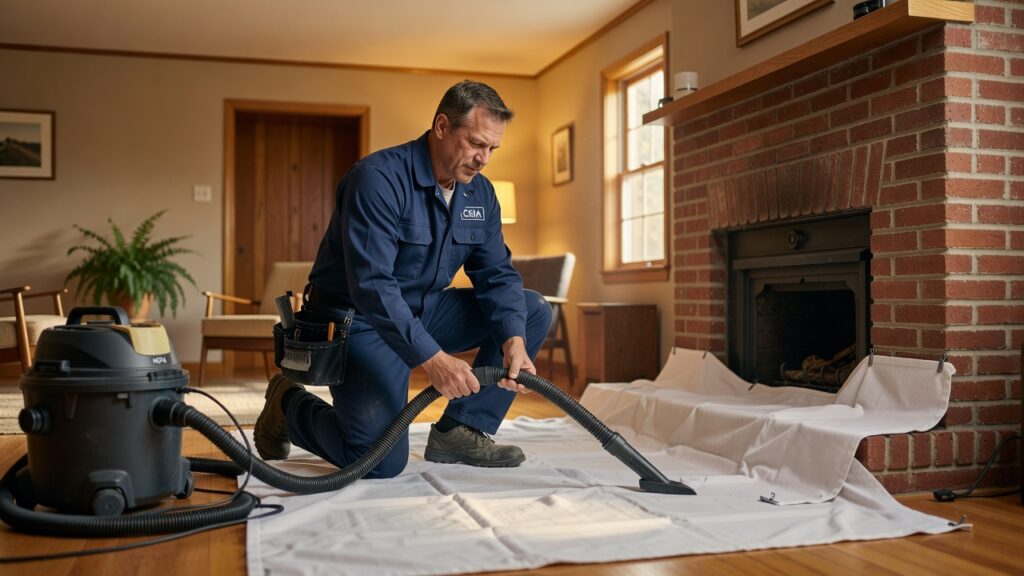
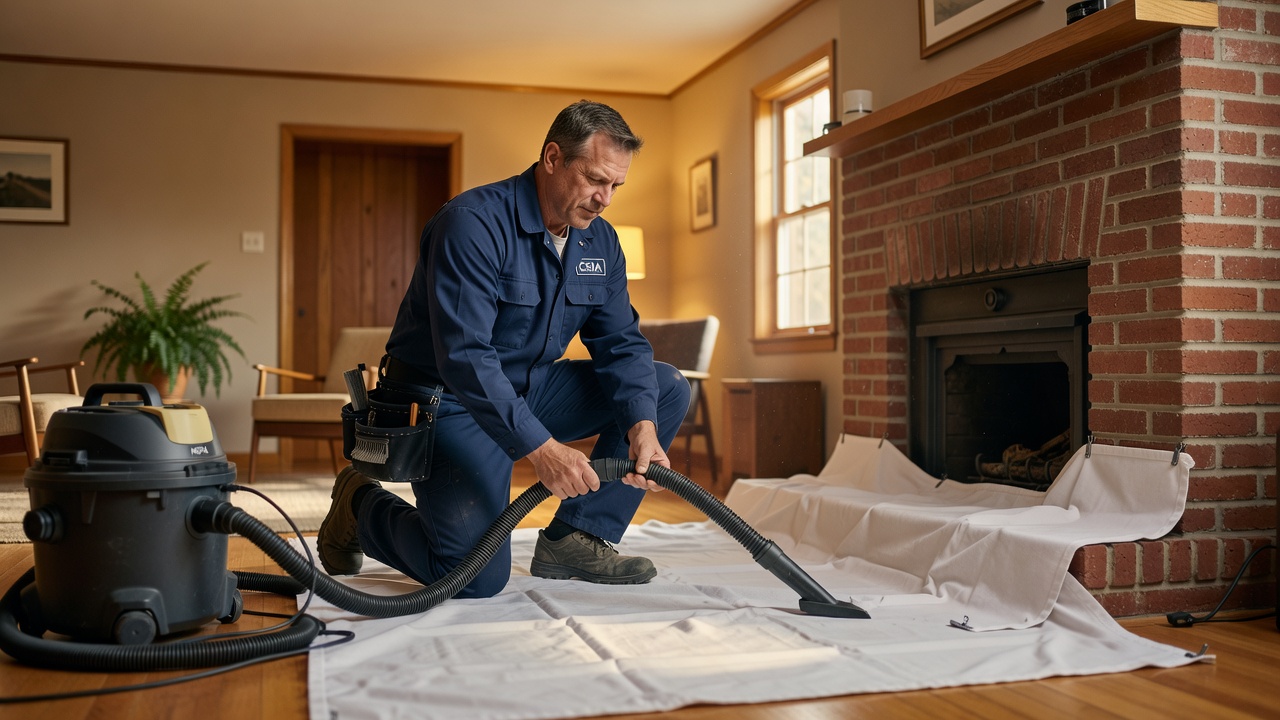
- Drop cloths and HEPA-filtered vacuum setup protecting your hearth and living area from soot and debris throughout the job.
- Rotary or hand-brush cleaning of the full flue length, matched to the liner type (clay tile, stainless steel, or cast-in-place) and level of buildup.
- Smoke chamber and smoke shelf cleaning, an area many sweeps skip that is a primary accumulation zone for creosote.
- Firebox cleaning — removal of ash, loose debris, and surface soot from the firebox walls and floor.
- Damper check to confirm it opens, seals, and operates correctly.
- Post-sweep written summary noting conditions observed, cleaning results, and any items that warrant follow-up attention.
We do not upsell repairs during a sweep visit. If we find something that needs attention, we document it clearly and explain your options you decide what happens next, on your timeline.
Our Sweep Process, Step by Step
We keep the process transparent because a lot of homeowners have never watched a chimney sweep work and aren’t sure what they’re paying for.
- Arrival and setup (10–15 min): We cover the hearth opening and lay drop cloths. Our vacuum runs continuously during cleaning, keeping soot inside the system rather than drifting into your home.
- Top-down or bottom-up cleaning (20–45 min): Depending on roof access and liner configuration, we work brushes through the full flue length. Stage two or three buildup adds time and sometimes a return visit with chemical treatment applied between appointments.
- Smoke chamber and shelf detail (10–20 min): These surfaces are inspected and brushed clean — this is often where we find the heaviest secondary deposits.
- Firebox and damper (10 min): Final surface cleanup and a hands-on damper operation check.
- Walkthrough with you (5–10 min): We show you what we found, hand you the written summary, and answer any questions before we leave.
Total appointment time for a single fireplace in good condition runs roughly 60–90 minutes. We don’t rush it.
Why Roosevelt Homeowners Choose Us for This Work
Roosevelt sits on the South Shore of Nassau County, a stretch of Long Island where older housing stock — much of it built in the 1940s through the 1960s means a lot of original clay flue tile systems that are now 60 to 80 years old. We know these chimneys. We know the crown cracking patterns common in homes that went through Hurricane Sandy and subsequent freeze-thaw cycles. We know that a house on Babylon Turnpike and one a few blocks off Nassau Road can have very different chimney conditions depending on when they were built and how often they’ve been maintained.
We are certified chimney sweeps our technicians hold CSIA (Chimney Safety Institute of America) certification, the industry’s primary professional credential. We carry full liability insurance and operate locally, which means when you call, you’re talking to someone who works in this community, not a national call center routing jobs to subcontractors.
We also do not manufacture urgency. If your chimney needs a sweep and nothing more, that’s what you’ll hear from us.
Honest Answers to Questions Roosevelt Residents Actually Ask
My fireplace smokes back into the room every time I light it — will a chimney sweep fix that?
Sometimes, yes. A blocked or heavily coated flue can restrict draft enough to push smoke into the room. If a blocked flue is the cause, cleaning resolves it. However, smoking fireplaces can also stem from a damper problem, a flue that’s undersized relative to the firebox opening, or negative air pressure in tightly sealed modern homes. Our sweep includes a damper check and a look at the firebox-to-flue ratio, so if cleaning alone doesn’t solve it, we’ll tell you what else is contributing.
How often do I really need a chimney sweep if I only burn two or three fires a month during winter?
The NFPA recommends annual inspection for any chimney in use, and most sweeps for actively used wood-burning fireplaces. Light use two to three fires per month for four months still accumulates enough creosote and soot to warrant annual cleaning, particularly in Long Island’s humid coastal climate where moisture can cause creosote to harden faster than in drier regions. If you’re burning natural gas logs rather than wood, inspection every two years is more typical, but the flue should still be checked for bird nests and liner condition.
Is there a best time of year to schedule a sweep in Roosevelt, NY?
Late summer through early fall August through October is ideal. You catch any buildup from last season before you need the fireplace again, and scheduling is easier before the October rush when everyone in Nassau County suddenly wants their chimney ready for winter at the same time. That said, we work year-round. If you’re in the middle of February and haven’t had your chimney cleaned in three years, call anyway a dirty chimney in active use is more urgent than the calendar.
Ready to Schedule Your Chimney Sweep?
Roosevelt Chimney serves Roosevelt and the surrounding Nassau County communities with straightforward, professional chimney sweep service. No pressure, no manufactured findings just a clean flue and a clear written report on what we found.
Call us to schedule your appointment or use our online booking form. We offer morning and afternoon availability and will confirm your appointment window the day before. If you have questions before you book, we’re happy to answer them no obligation.
Call Roosevelt Chimney today or book online to get your chimney cleaned before fire season.